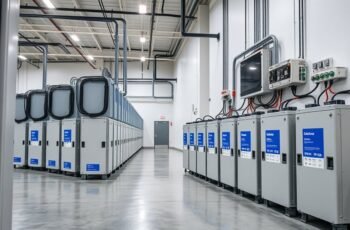
Did you know that proper maintenance can profoundly extend the lifespan and efficiency of your home energy storage batteries? While these systems are designed for durability, neglecting routine checks and care can lead to reduced capacity, safety hazards, or costly replacements. To optimize performance, it’s essential to understand the precise procedures involved in monitoring, cleaning, and managing your battery system. Let’s explore the critical steps that keep your energy storage reliable and safe over the years.
Key Takeaways
- Regularly check voltage and State of Charge (SOC) to prevent over-discharge and overcharge, ensuring optimal performance.
- Keep batteries and terminals clean, dry, and free of dust or corrosion to maintain electrical integrity.
- Monitor temperature and ensure proper ventilation to prevent overheating and thermal stress.
- Follow manufacturer guidelines for charging, discharging, and calibration to extend battery lifespan.
- Schedule periodic inspections for physical damage, leaks, or swelling, and address issues promptly.
How Do Home Energy Storage Batteries Work and Why Maintenance Matters
Although home energy storage batteries are designed to efficiently store and supply electrical energy, their performance heavily depends on proper maintenance. The core of their operation lies in battery chemistry, which determines how ions move during charge and discharge cycles, directly impacting energy storage effectiveness. Different chemistries, such as lithium-ion or lead-acid, have unique characteristics that influence cycle life, voltage stability, and overall reliability. Maintaining ideal operating conditions—such as avoiding deep discharges or excessive temperatures—preserves battery chemistry integrity and maximizes energy storage efficiency. Proper maintenance ensures that the electrochemical processes within the cells remain stable, reducing capacity fade over time. Ultimately, understanding these technical aspects helps us prevent degradation, prolong battery lifespan, and sustain efficient energy supply in our homes.
Regularly Check Battery Voltage and State of Charge
Regularly monitoring your home energy storage battery’s voltage and state of charge (SOC) is essential for maintaining peak performance and preventing damage. Precise voltage regulation ensures the battery operates within safe limits, preserving its capacity and longevity. By checking voltage levels regularly, we can detect early signs of capacity loss or imbalance, which directly impact overall battery health. Maintaining accurate SOC readings helps us avoid over-discharge or overcharge conditions that can accelerate degradation. Using a multimeter or dedicated monitoring system, we guarantee voltage stays within manufacturer-recommended ranges, enhancing battery performance. Consistent voltage and SOC assessments allow us to identify subtle shifts in capacity, enabling timely adjustments. This proactive approach is key to maximizing battery lifespan and ensuring reliable energy storage for your home.
Keep Batteries Clean and Free of Dust and Debris
Maintaining clean battery surfaces is essential to prevent dust and debris from causing insulation issues or overheating. We recommend regular surface cleaning using non-abrasive, static-free wipes and avoiding compressed air that could displace sensitive components. Ensuring dust does not accumulate around terminals and vents helps maintain peak performance and prolongs battery lifespan.
Regular Surface Cleaning
Have you considered how dust and debris accumulation can impact the performance and longevity of your home energy storage battery? Regular surface cleaning is essential to prevent conductive dust buildup that could cause overheating or corrosion, jeopardizing battery efficiency. Use a microfiber cloth and non-abrasive cleaner to gently remove surface contaminants, avoiding moisture intrusion into sensitive components. Maintaining a clean surface supports energy storage innovations by ensuring ideal thermal management and electrical integrity. Additionally, a well-maintained battery simplifies recycling processes at the end of its life, reducing environmental impact. Consistent cleaning routines not only prolong battery lifespan but also help detect early signs of corrosion or damage, enabling timely maintenance. Prioritizing surface cleanliness is a vital step toward maximizing your system’s reliability and advancing sustainable energy solutions.
Avoid Dust Accumulation
Dust and debris accumulation can substantially impair the performance of your home energy storage battery by obstructing vents, insulating critical components, and promoting corrosion. To prevent this, regular inspection of the battery enclosure for dust accumulation is essential. When cleaning, employ techniques such as using a soft brush or compressed air to dislodge dust without damaging sensitive parts. Avoid harsh cleaning agents that could cause corrosion or insulate components further. Instead, focus on gentle removal of debris from vents, terminal areas, and cooling fins. Consistent cleaning techniques ensure dust does not build up over time, which could lead to overheating or reduced efficiency. Keeping the battery free of dust and debris optimizes performance and prolongs component longevity.
Use Proper Cleaning Tools
To guarantee your home energy storage batteries remain free of dust and debris, selecting the appropriate cleaning tools is essential. Proper cleaning tools ensure effective dust removal without risking damage to sensitive components. Use soft-bristled brushes to dislodge accumulated dust gently, avoiding static buildup. Microfiber cloths are ideal for wiping surfaces without scratching or leaving fibers behind. Compressed air cans provide targeted dust removal in hard-to-reach areas, preventing debris from settling. Anti-static wipes help reduce static electricity buildup during cleaning. Ultimately, avoid metal tools or abrasive materials that can cause corrosion or surface damage. Employing these specific cleaning tools promotes safe, efficient maintenance, ensuring peak performance and longevity of your batteries. Proper dust removal techniques are vital for maintaining the integrity of your energy storage system.
Monitor for Signs of Battery Damage or Corrosion
Regularly inspecting your home energy storage battery for signs of damage or corrosion is vital to maintaining peak performance and safety. We focus on damage detection by examining terminal connections, casing, and wiring for cracks, discoloration, or leaks, which could indicate internal issues. Corrosion prevention involves checking for white or greenish deposits on terminals or connectors, signaling oxidation that can impair conductivity. Promptly removing corrosion with appropriate tools and applying protective coatings can prevent further deterioration. We also look for swelling, unusual odors, or discoloration, which might point to internal damage. Consistent inspection allows early identification of issues that could compromise safety or efficiency. By proactively monitoring, you guarantee the longevity of your battery and maintain optimal energy storage performance.
Ensure Proper Ventilation and Temperature Control
Maintaining adequate airflow around the battery bank is essential to prevent heat buildup and guarantee efficient operation. We recommend monitoring temperature levels regularly and avoiding proximity to heat sources that can cause thermal stress. Proper ventilation and temperature regulation are critical to extending battery lifespan and ensuring safe operation.
Maintain Adequate Airflow
Ensuring proper airflow around home energy storage batteries is essential for ideal performance and longevity, as inadequate ventilation can lead to excessive heat buildup that compromises battery health. Effective airflow optimization involves implementing ventilation strategies that facilitate heat dissipation and prevent hotspots. Proper placement of batteries in ventilated enclosures, avoiding confined spaces, and ensuring unobstructed air pathways are critical. Additionally, installing passive or active ventilation systems, such as exhaust fans or vents, can enhance airflow circulation. Regularly inspecting and cleaning ventilation openings prevents dust and debris buildup that impairs airflow. Adequate airflow management maintains consistent temperature conditions, reducing thermal stress on batteries and extending their lifespan.
- Position batteries in open, ventilated locations
- Use exhaust fans or vents for active airflow
- Keep ventilation pathways free of obstructions
- Schedule routine inspections and cleaning
- Incorporate airflow sensors for monitoring
Monitor Temperature Levels
Monitoring temperature levels is critical for ideal home energy storage battery performance, as excessive heat can accelerate chemical degradation and reduce lifespan. Effective thermal regulation relies on precise temperature sensors to track battery core temperatures continuously. These sensors provide real-time data, allowing us to identify overheating early and adjust ventilation accordingly. Maintaining suitable temperature ranges (typically 20-25°C) prevents thermal stress and ensures efficient chemical reactions within the battery cells. Proper ventilation systems, combined with accurate temperature monitoring, facilitate heat dissipation and prevent hotspots. Regularly reviewing temperature sensor readings helps us implement proactive thermal management, avoiding thermal runaway and capacity loss. To summarize, diligent thermal regulation through reliable temperature sensors is essential for maximizing battery longevity and ensuring safe, efficient operation.
Avoid Heat Sources
Excess heat is one of the most immediate threats to home energy storage batteries, as elevated temperatures can accelerate chemical degradation and compromise safety. To mitigate this, we must minimize exposure to heat sources and maintain proper temperature control. Implementing effective ventilation ensures heat dissipation and prevents localized temperature spikes. Avoid installing batteries near direct sunlight, heating vents, or appliances that generate significant heat. Additionally, monitoring ambient temperature levels helps maintain ideal conditions. Consider the following strategies:
- Use ventilated enclosures to promote airflow
- Keep batteries away from direct sunlight and heat sources
- Install temperature sensors for real-time monitoring
- Maintain a consistent, cool ambient temperature
- Use insulation to regulate internal temperature fluctuations
These measures help preserve battery longevity and operational safety.
Use the Right Charging and Discharging Practices
Proper charging and discharging practices are vital to maximizing the lifespan and efficiency of your home energy storage battery. Adhering to specific charging protocols ensures the battery remains within ideal voltage and current ranges, preventing overcharging or undercharging that can degrade cell chemistry. Implementing effective discharging strategies involves avoiding deep discharges that fall below recommended depth-of-discharge levels, which can cause capacity loss over time. Maintaining a consistent charge cycle, ideally between 20% and 80% state-of-charge, minimizes stress on battery components. It’s essential to use chargers compatible with your battery’s specifications and to monitor voltage and temperature during operation. By following these charging protocols and discharging strategies, you enhance battery performance and extend its operational lifespan.
Schedule Professional Inspections and Preventative Maintenance
Scheduling regular professional inspections guarantees early detection of potential issues such as cell degradation or electrolyte imbalance, which can compromise system performance. Preventative maintenance enhances battery longevity by addressing minor faults before they escalate into costly failures. Consistent service intervals provide data-driven insights to optimize operational efficiency and safety.
Regular Inspection Scheduling
Regular inspections are essential to guarantee your home energy storage battery operates efficiently and maintains safety standards over time. Scheduling professional assessments ensures early detection of potential issues, such as degraded cell performance or corrosion, which could compromise safety or efficiency. During inspections, technicians verify compliance with energy storage regulations, assess system integrity, and evaluate the battery’s capacity and voltage stability. Additionally, they check for proper ventilation and inspect wiring connections for corrosion or damage. Proper documentation supports compliance and facilitates battery recycling when end-of-life approaches. Regular inspections also help confirm that safety features are operational, preventing hazards. To optimize maintenance, establish a routine inspection schedule aligned with manufacturer guidelines and local regulations, ensuring longevity and safe operation.
Preventative Maintenance Benefits
Implementing scheduled professional inspections and preventative maintenance considerably extends the lifespan and enhances the reliability of your home energy storage battery system. Regular diagnostics can identify potential issues like capacity fade, thermal imbalance, or electrolyte degradation before they escalate, ensuring peak performance. This proactive approach supports energy storage innovations by maintaining system efficiency and safety standards. Additionally, routine assessments facilitate proper battery recycling practices, reducing environmental impact and promoting sustainable disposal. Preventative maintenance also involves firmware updates and system recalibrations, which sustain energy storage system reliability. By prioritizing scheduled inspections, homeowners can mitigate unexpected failures, optimize performance, and contribute to long-term environmental stewardship through responsible battery recycling. Overall, these measures maximize investment and ensure consistent, safe energy storage operation.
Manage Your Battery’s Charge Cycles for Longevity
Controlling your battery’s charge cycles is essential for extending its lifespan, as frequent, shallow charges can cause more wear than deeper, less frequent discharges. Effective charge cycle management maximizes battery longevity by minimizing unnecessary cycling and balancing charge levels. To achieve this, consider these strategies:
- Avoid charging to 100% unless necessary
- Keep charge levels between 20-80% for daily use
- Limit deep discharges below 20%
- Use timers or smart chargers to regulate charging times
- Monitor real-time charge levels regularly
Implementing these practices helps reduce stress on the battery, preserving capacity and performance over time. Proper management of charge cycles is a critical component in maintaining ideal battery health and ensuring long-term reliability of your energy storage system.
Keep an Eye on Battery Management System (BMS) Settings
Monitoring and adjusting the Battery Management System (BMS) settings is essential for maintaining ideal battery health and performance. Properly calibrated BMS parameters ensure accurate voltage, current, and temperature readings, which are critical for preventing overcharging and deep discharges. Regular battery calibration helps maintain these measurement accuracies, optimizing lifespan and efficiency. Additionally, firmware updates are indispensable; they often include bug fixes, security patches, and improvements to BMS algorithms that enhance monitoring precision and safety protocols. We recommend routinely reviewing BMS configurations to confirm they align with manufacturer specifications. Keeping firmware current ensures the system benefits from the latest features and stability enhancements. By diligently managing these settings, you safeguard your battery’s longevity and reliable operation over its service life.
Troubleshoot Common Battery Issues and When to Replace
When diagnosing battery issues, it’s essential to recognize signs indicating problems like capacity loss, voltage irregularities, or overheating. These symptoms often point to internal degradation or faulty BMS calibration. Common issues include decreased runtime, inconsistent voltage output, or excessive heat during operation. If these persist, it’s time to evaluate battery replacement to prevent system failure. Additionally, understanding when to replace batteries ties into energy storage innovations that promote recycling and sustainability. Proper troubleshooting involves checking for corrosion, verifying connection integrity, and measuring voltage stability. If the battery is beyond repair, prioritize responsible battery recycling to minimize environmental impact. Regular maintenance and monitoring ensure peak performance and longevity of your energy storage system, safeguarding your investment and supporting eco-friendly energy management.
Frequently Asked Questions
How Long Do Home Energy Storage Batteries Typically Last?
Typically, home energy storage batteries last 5 to 15 years, depending on battery capacity and charging cycles. Regular maintenance and avoiding deep discharges help prolong lifespan, ensuring peak performance over their expected operational period.
Can I Upgrade My Battery System Easily?
Think of upgrading as expanding your energy pipeline; we check battery capacity and system compatibility first. Upgrading involves evaluating new modules’ capacity, ensuring seamless integration, and possibly updating system components to optimize performance and maintain safety standards.
What Safety Precautions Should I Follow During Maintenance?
We prioritize fire safety and electrical hazard prevention by wearing insulated gloves and goggles, de-energizing the system before maintenance, avoiding water contact, and ensuring proper ventilation, adhering strictly to manufacturer guidelines and local electrical codes for safe handling.
How Do Environmental Factors Affect Battery Lifespan?
Environmental factors like temperature fluctuations and humidity can accelerate battery degradation; we prevent corrosion and enhance lifespan through effective temperature management and regular inspection, ensuring optimal performance and durability of your energy storage system.
Are There Eco-Friendly Disposal Options for Old Batteries?
We recommend participating in certified recycling programs that adhere to disposal regulations, ensuring environmentally friendly disposal of old batteries. Proper recycling minimizes hazardous waste, conserves resources, and aligns with eco-conscious practices, safeguarding both environment and public health.
Conclusion
In the end, meticulous maintenance isn’t just for prolonging battery life—it’s a badge of honor, a proof to our technological mastery. Ignoring these details might save a minute today, but tomorrow’s failures aren’t worth the gamble. After all, who wouldn’t want their battery to outlast the latest smartphone? So let’s keep those terminals clean, firmware updated, and vents clear—because a well-maintained battery is the only thing standing between us and a blackout of biblical proportions.