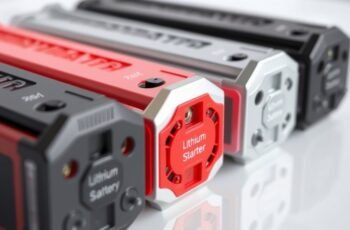
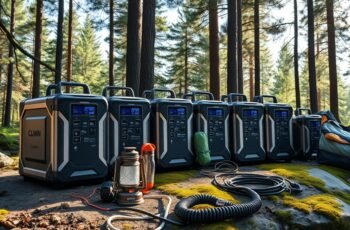
When considering backup power solutions for our homes, understanding the fundamental differences between energy storage batteries and generators is crucial. Each option offers distinct advantages and trade-offs regarding performance, cost, environmental impact, and maintenance. As we analyze these technologies, it becomes clear that choosing the right system depends on specific needs and priorities. To make an informed decision, we need to examine how these systems operate and what they truly offer for reliable home energy management.
Key Takeaways
- Batteries store renewable energy for silent, quick, and eco-friendly backup, while generators provide larger power with noise and emissions.
- Batteries require minimal maintenance and have lower operational costs compared to fuel-dependent generators.
- Generators offer immediate power during outages but have higher ongoing fuel and maintenance expenses.
- Battery systems are scalable, integrate with smart home systems, and support sustainable energy practices.
- Generators deliver higher capacity but produce environmental pollution and operate with delayed response times.
How Do Home Energy Storage Batteries Work?
Although home energy storage batteries may seem complex, their operation hinges on fundamental electrochemical processes that enable efficient energy management. Central to this is battery chemistry, where chemical reactions convert stored chemical energy into electrical energy through controlled charge and discharge cycles. Lithium-ion batteries, common in home storage, utilize layered electrode materials that facilitate rapid ion movement, ensuring high efficiency and longevity. These batteries support energy conservation by storing excess solar power or grid energy during low demand periods, then releasing it when consumption peaks. This process reduces reliance on external power sources, minimizes energy waste, and enhances overall system efficiency. By understanding the interplay of battery chemistry and energy flow, we can optimize storage solutions for reliable, sustainable home energy management.
What Are the Main Benefits of Using a Generator?
Generators provide a consistent and reliable power source, ensuring continuous operation during outages or remote activities. Their portability allows for flexible deployment across various locations, making them essential for on-the-go power needs. By understanding these core benefits, we can better assess their role in home energy solutions.
Reliable Power Supply
What are the primary advantages of relying on a generator for power supply? Generators provide a consistent, reliable energy source, essential during grid outages or for remote locations. They support renewable integration by seamlessly bridging intermittent sources like solar or wind, ensuring uninterrupted power. Additionally, generators promote grid independence, reducing reliance on centralized infrastructure.
- Continuous power during outages, safeguarding critical systems.
- Enhanced grid independence, minimizing external dependency.
- Reliable backup for renewable energy systems, smoothing variability.
- Rapid startup times, ensuring immediate power restoration.
These attributes make generators a crucial component for maintaining a stable power supply, especially in areas where grid stability is uncertain or renewable integration is prioritized. This technical reliability underpins their importance in modern energy management.
Portable and Movable
Have you considered the significant mobility advantages that come with using a portable generator? Portable energy solutions enable us to transfer power efficiently across various locations, making them ideal for outdoor work or emergency situations. Movable systems are designed for flexibility, allowing quick setup and teardown without permanent installation.
| Feature | Benefit |
|---|---|
| Compact Design | Easy to transport and store |
| Lightweight | Reduces physical effort during movement |
| Self-Contained | No external connections needed for operation |
These attributes enhance versatility, ensuring power is available where needed. Unlike static systems, portable generators provide immediate, reliable power for remote sites or transient needs, making them indispensable tools for versatile energy management.
Comparing Costs: Which Is More Budget-Friendly?
When comparing costs between energy storage batteries and generators, we focus on initial purchase price and long-term expenses. Batteries typically have higher upfront costs but lower operating costs over time, while generators may be cheaper initially but incur higher fuel and maintenance costs. Analyzing these factors helps determine which option offers better budget efficiency in the long run.
Initial Purchase Price
The initial purchase price of home energy storage batteries and generators varies considerably, impacting long-term affordability. A thorough cost comparison must factor in upfront costs and installation complexity.
- Battery systems generally range from $5,000 to $15,000, depending on capacity.
- Generators typically cost between $1,000 and $5,000 for basic models.
- Installation complexity influences total cost—batteries often require professional setup, increasing expenses.
- Generators are usually simpler to install, resulting in lower initial labor costs.
While batteries have higher upfront costs, their integration with existing solar systems can offset expenses over time. Conversely, generators offer lower initial investments but may incur higher operational and maintenance costs, affecting overall budget considerations.
Long-Term Expenses
Although initial costs are important, evaluating long-term expenses reveals which option is more budget-friendly over time. Home energy storage batteries generally have higher upfront costs but benefit from high solar efficiency, reducing reliance on external power sources and lowering operational expenses. Their minimal fuel consumption translates to negligible ongoing costs, making them cost-effective over extended periods. Conversely, generators often entail ongoing fuel expenses, which can escalate considerably depending on usage frequency. Over time, fuel consumption becomes a major factor influencing total cost of ownership. While generators might be less expensive initially, their continuous operational costs can outweigh the savings. Therefore, analyzing long-term expenses favors batteries for their lower fuel consumption and higher solar efficiency, offering a more sustainable and economical energy solution in the long run.
Environmental Impact: Battery Storage vs. Generators
While both battery storage systems and generators serve to supply backup power, their environmental impacts differ markedly. Battery storage, especially when integrated with renewable energy sources, notably reduces carbon footprint by minimizing emissions during operation. Conversely, traditional generators rely on fossil fuels, emitting greenhouse gases and contributing to air pollution.
- Battery systems store excess renewable energy, promoting cleaner energy use.
- Generators produce higher emissions and have a larger carbon footprint during operation.
- Manufacturing batteries involves resource extraction and energy consumption, but these impacts are offset over lifespan with cleaner operation.
- Generators contribute to local air quality issues due to emissions.
Ease of Use and Maintenance Requirements
Battery storage systems generally offer simpler operation and lower maintenance requirements compared to generators. Their maintenance frequency is minimal, often limited to periodic inspections and software updates, reducing long-term operational effort. User-friendly features, such as automated monitoring and integrated safety systems, enhance ease of use, making them accessible even for non-expert users. In contrast, generators demand regular maintenance, including oil changes, filter replacements, and fuel management, which increases complexity and time investment. The streamlined design of battery systems minimizes user intervention, favoring a plug-and-play approach. Overall, batteries are designed for straightforward operation with fewer routine tasks, while generators require more active maintenance and technical oversight. This simplicity ultimately improves reliability and reduces the effort involved in day-to-day management.
Which Solution Is Better for Emergency Power?
When evaluating emergency power solutions, batteries often provide a more immediate and reliable response due to their ability to deliver stored energy instantaneously. This quick activation enhances grid independence during outages and supports renewable integration by storing excess solar or wind power for later use. The key advantages include:
- Rapid response time ensures critical loads stay powered without delay.
- Quiet operation reduces noise pollution compared to generators.
- Lower maintenance requirements improve long-term reliability.
- Better integration with renewable sources promotes sustainable independence.
While generators can produce substantial power, they typically require manual startup and ongoing fuel supply, making them less efficient for immediate backup needs. Batteries excel in scenarios demanding swift, clean, and autonomous emergency power.
Factors to Consider When Choosing Between Batteries and Generators
Choosing between batteries and generators requires a careful assessment of several critical factors that influence their suitability for specific applications. Key considerations include energy efficiency, storage capacity, operational costs, and environmental impact. Batteries typically offer higher energy efficiency and quieter operation, making them ideal for daily use and long-term storage. Generators, however, provide higher storage capacity and power output during extended outages, but often at a lower energy efficiency and higher fuel costs.
| Factor | Batteries | Generators |
|---|---|---|
| Energy Efficiency | Higher, less energy lost during storage | Lower, fuel conversion losses |
| Storage Capacity | Limited, depends on battery size | Larger, fuel-based capacity |
| Operational Cost | Lower, minimal maintenance | Higher, fuel and maintenance |
Final Tips for Making the Right Home Power Choice
Evaluating your specific energy needs and usage patterns is essential to selecting the most appropriate home power system. To optimize your decision, consider these key factors:
- Renewable integration: Guarantee compatibility with solar or wind systems for sustainability and cost savings.
- Smart home compatibility: Verify whether the system integrates seamlessly with your existing smart home setup for centralized control.
- Load demands: Analyze peak and average energy consumption to select a system capable of reliable supply during outages.
- Future scalability: Opt for solutions that allow expansion as your energy requirements evolve.
Frequently Asked Questions
How Long Do Home Energy Storage Batteries Typically Last?
Home energy storage batteries typically last 10-15 years, depending on battery lifespan and storage maintenance. Regular maintenance, such as monitoring charge levels and temperature, extends their efficiency and overall lifespan, ensuring reliable energy storage over time.
Can Generators Be Used Indoors Safely?
Generators shouldn’t be used indoors due to significant carbon monoxide risks. Adequate indoor ventilation is essential if used outdoors, but running generators inside can quickly lead to dangerous CO buildup, risking health and safety.
Do Batteries Require Regular Software Updates?
Batteries do require regular software updates, like tuning a finely tuned engine, to optimize performance and extend their lifespan. These updates guarantee the system remains efficient, reliable, and protected against evolving threats, safeguarding your energy investment.
What Are the Noise Levels of Generators During Operation?
Generators typically produce sound levels ranging from 60 to 90 decibels, depending on size and load, which can be quite noisy. We analyze their noise levels critically, considering sound insulation and placement to minimize disturbance during operation.
Are There Tax Incentives for Installing Home Energy Storage Systems?
We find that installing home energy storage systems often qualifies for tax credits and rebate programs, which considerably reduce upfront costs; these incentives vary by region, so analyzing local policies can optimize financial benefits for system deployment.
Conclusion
Ultimately, choosing between batteries and generators boils down to balancing budget, bandwidth, and environmental ethos. Batteries bring silent, sustainable solutions suited for steady, low-maintenance needs, while generators deliver dependable, powerful backup at higher costs and emissions. We recommend weighing your specific requirements carefully—considering capacity, costs, and eco-impact—to make an informed, intelligent decision. By aligning your needs with these critical considerations, you’ll power your home prudently and precisely.