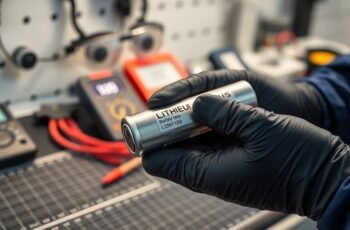
Many people are unaware that using the wrong charger or neglecting proper safety protocols can lead to serious hazards like fires or chemical leaks. Lithium batteries are sensitive components requiring precise handling and vigilant monitoring. Failing to follow recommended procedures increases risks that might not be immediately obvious. To guarantee safety and prolong your batteries’ lifespan, understanding the critical safety tips is essential—so, let’s explore what you need to know.
Key Takeaways
- Always verify charger compatibility with your lithium battery’s chemistry and capacity before use.
- Use manufacturer-recommended chargers with proper safety certifications to prevent overcharging and overheating.
- Monitor batteries during charging, disconnect promptly after full charge, and avoid leaving unattended.
- Inspect cables and connectors regularly for damage and replace damaged chargers immediately.
- Store batteries in a cool, dry, and fire-resistant environment, avoiding extreme temperatures and physical damage.
What Are Lithium Battery Chargers and Why Are Safety Tips Important?
Lithium battery chargers are devices designed to replenish the energy stored in lithium-ion batteries, which are commonly used in smartphones, laptops, and electric vehicles. These chargers must be compatible with specific battery chemistries and voltage requirements to guarantee safe operation. Proper charger compatibility minimizes risks like overheating, overcharging, and potential thermal runaway. Additionally, responsible battery recycling is vital for environmental safety and reducing hazardous waste. Using incompatible chargers or neglecting proper recycling practices can compromise battery integrity and safety. We must approach charging with caution, understanding that improper handling or mismatched chargers can lead to dangerous failures. Being precise about charger compatibility and supporting battery recycling are essential steps in maintaining the safety and longevity of lithium-ion batteries.
Choose the Right Charger for Your Lithium Battery
To guarantee safe and efficient charging, selecting the correct charger for your lithium battery is essential. Properly matching chargers ensures peak performance and reduces risks associated with incompatible or faulty equipment.
Choosing the right charger ensures safe, efficient lithium battery performance and reduces potential risks.
Consider these key points:
- Battery compatibility: Verify that the charger is designed specifically for your battery’s chemistry and capacity.
- Charging compatibility: Ensure the charger’s voltage and current outputs align with your battery’s specifications.
- Manufacturer recommendations: Always follow the manufacturer’s guidelines for charger selection.
- Quality and certification: Opt for chargers with appropriate safety certifications to prevent hazards.
Choosing a charger that fits these criteria minimizes risks, maximizes lifespan, and guarantees a safe, reliable power source for your lithium battery.
Follow Proper Charging Procedures to Prevent Risks
Ensuring proper charging procedures are followed is critical to minimizing safety risks and maintaining battery integrity. Adhering to strict charging safety protocols helps prevent overheating, overcharging, and potential thermal runaway. Always use the manufacturer’s recommended charger and avoid third-party alternatives that may not meet safety standards. Proper battery maintenance includes monitoring charging times and avoiding prolonged connections once charging completes. Consistently inspecting cables and connectors for damage ensures safe operation. Charging in a well-ventilated, fire-resistant environment reduces risk in case of malfunctions. Never leave batteries unattended during charging. By following these procedures, we reduce hazards, extend battery lifespan, and promote safe, reliable battery performance. Proper charging practices are crucial for both safety and maximum battery functionality.
Identify and Respond to Warning Signs During Charging
During charging, maintaining awareness for warning signs such as excessive heat, swelling, or leaks, which can indicate a safety risk, is crucial. Unusual noises or vibrations also merit immediate attention, as they may signal internal damage. Recognizing these signs promptly allows us to respond quickly and prevent potential hazards.
Recognize Overheating Signs
When a lithium battery charger begins to overheat, it can indicate a serious safety risk that requires immediate attention. Thermal escalation often signals underlying issues, risking damage or fire. Recognizing melting indicators and abnormal heat is vital. If you notice:
- Unusual warmth or hot spots during charging
- Visible melting or deformation of charger components
- A persistent burning odor
- Excessive smoke or sparks
these are clear warnings of overheating. Such signs mean the charger and battery are experiencing thermal escalation beyond safe limits. Ignoring these symptoms can lead to catastrophic failure. Always disconnect immediately and inspect for damage. Proper vigilance can prevent accidents, ensuring safe charging practices and safeguarding your equipment and personal safety.
Detect Swelling or Leaks
Overheating signs can sometimes be accompanied by physical changes in the battery or charger, indicating potential failure. Detecting battery swelling is crucial, as it signals internal damage and risk of rupture. Regularly inspect the battery for any outward bulging or deformation, which can compromise safety. Leak detection is equally essential; leaks often appear as liquid or corrosion around the terminals or casing. These leaks can cause short circuits or fires if ignored. If you notice any swelling, leaks, or other physical abnormalities during charging, immediately disconnect the battery and handle it with caution. Do not attempt to puncture, press, or further disturb a swollen or leaking battery. Promptly dispose of the damaged cell according to proper hazardous waste protocols to prevent accidents.
Monitor Unusual Noises
Unusual noises during charging can serve as critical warning signs of underlying battery issues. These sounds may indicate safety hazards that require immediate attention. We urge you to stay alert and monitor your battery closely.
Common warning signs include:
- High-pitched squealing—a sign of electrical stress or internal damage.
- Buzzing or rattling noises—possible internal component failure.
- Hissing sounds—potential leaks or venting, increasing risk of fire.
- Crackling or popping—indicates thermal instability or short circuits.
Any of these unusual noises suggest that the battery is compromised and could pose serious safety hazards. If detected, disconnect the charger immediately and inspect the device to prevent accidents or damage.
Store Lithium Batteries and Chargers Safely
Proper storage of lithium batteries and chargers is critical to safety, requiring a controlled environment that minimizes risk. We must avoid exposing them to extreme temperatures, which can cause thermal instability or damage. Maintaining a stable, moderate temperature environment is essential for preserving battery integrity and preventing hazardous conditions.
Proper Storage Environment
Ensuring a safe storage environment for lithium batteries and chargers is essential to prevent potential hazards. Proper storage mitigates risks like thermal runaway or fire hazards. We recommend prioritizing climate control to maintain stable conditions and prevent humidity buildup that can damage internal components. Secure storage is equally critical; always store batteries in fire-resistant containers and away from flammable materials.
- Store in a cool, dry place with controlled humidity levels to prevent corrosion.
- Use fire-resistant and ventilated containers to contain any accidental leaks.
- Keep batteries away from direct sunlight, heat sources, and water.
- Regularly inspect storage areas for damage or corrosion, adjusting conditions as necessary.
Following these steps ensures a cautious, controlled environment that minimizes risks associated with lithium batteries and chargers.
Avoid Extreme Temperatures
To prevent damage and potential safety hazards, it’s essential to avoid exposing lithium batteries and chargers to extreme temperatures. Proper temperature control minimizes risks such as thermal runaway or capacity loss. Environmental conditions like heat or cold can severely impair battery performance and safety.
| Temperature Range | Effect on Batteries | Recommended Storage Condition |
|---|---|---|
| Below 0°C | Reduced capacity, damage | Store in a cool, dry place |
| 0°C to 25°C | Optimal performance | Room temperature |
| Above 40°C | Accelerated degradation | Avoid direct sunlight |
| Extreme heat/cold | Safety hazards, failure | Use insulated storage |
Careful management of environmental conditions ensures longevity and safety of lithium batteries and chargers.
Maintain and Dispose of Lithium Batteries Properly
Because lithium batteries can pose safety risks if mishandled, it’s essential that we maintain and dispose of them correctly. Improper handling can lead to fires, leaks, or environmental harm. To minimize risks:
- Always store batteries in a cool, dry place away from direct sunlight.
- Recycle batteries through certified battery recycling programs to reduce environmental impact.
- Avoid puncturing or damaging batteries, which can cause dangerous chemical leaks.
- Dispose of old or damaged batteries promptly, following local regulations to prevent environmental contamination.
Proper maintenance and disposal are crucial for safety and sustainability. Recycling lithium batteries not only prevents potential hazards but also conserves resources, reducing environmental impact. Stay cautious—your safety and the planet depend on it.
What Are Common Mistakes to Avoid When Using Lithium Battery Chargers?
Using lithium battery chargers improperly can lead to serious safety hazards, so it’s important that we recognize and avoid common mistakes. One key error is neglecting charger compatibility; using an incompatible charger can cause overcharging or overheating, risking thermal runaway. Additionally, neglecting proper battery recycling practices after disposal can pose environmental and safety risks. Another mistake is leaving batteries unattended during charging, which increases the risk of damage or fire. Overlooking manufacturer guidelines or using damaged chargers can also compromise safety. To minimize risks, always verify charger compatibility, follow recommended charging procedures, and dispose of batteries responsibly. Proper handling and adherence to safety protocols help prevent accidents, ensuring both user safety and the longevity of the batteries.
Frequently Asked Questions
Can I Charge Lithium Batteries With a Non-Compatible Charger?
Charging lithium batteries with a non-compatible charger risks damage and safety hazards. We emphasize proper charging etiquette and battery compatibility considerations to prevent potential fires, explosions, or reduced battery lifespan, making careful charger selection essential for safety and performance.
How Often Should I Inspect My Lithium Battery Charger for Damage?
We inspect our lithium battery chargers weekly, like when a hypothetical crack or frayed cord appears, to guarantee proper battery maintenance and uphold charging etiquette. Regular checks help prevent hazards and ensure safe, reliable operation.
Is It Safe to Leave a Lithium Battery Charging Overnight?
We advise against overnight charging because it can lead to battery overheating, increasing the risk of thermal runaway. Always monitor your lithium battery during charging, follow manufacturer guidelines, and disconnect once fully charged to guarantee safety.
What Are the Signs of a Failing Lithium Battery Charger?
We’ve seen chargers fail when they cause battery overheating or develop connector corrosion, signaling a failing lithium battery charger. Stay cautious; watch for unusual heat, corrosion, or inconsistent charging, and replace chargers promptly to prevent potential safety hazards.
Are There Specific Safety Certifications to Look for in Chargers?
We recommend choosing chargers with recognized safety certifications like UL or IEC, ensuring compatibility and adherence to safety standards. Always verify charger compatibility with your lithium battery to prevent risks, and prioritize certified products for reliable, cautious charging.
Conclusion
In summary, adhering to strict safety protocols with lithium battery chargers is essential; over 70% of lithium battery fires occur due to improper handling or charging. By following recommended procedures, choosing compatible chargers, and inspecting batteries regularly, we considerably reduce the risk of accidents. Safety isn’t just about avoiding damage—it’s about protecting lives and property. Let’s stay vigilant and informed to guarantee safe, reliable battery use in all our applications.