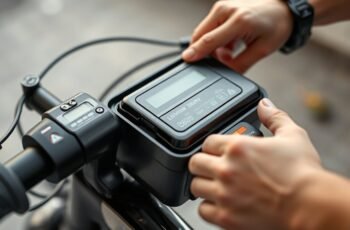
Lithium batteries are at the core of modern scooter performance, making proper maintenance vital for safety and longevity. Their complexity requires precise handling, from charging routines to storage conditions, to prevent potential hazards and ensure reliable operation. Understanding these nuanced practices can greatly extend your battery’s lifespan and optimize your scooter’s efficiency. We’ll explore critical tips that help you maintain peak performance and avoid costly mistakes—a must-know for responsible scooter ownership.
Key Takeaways
- Regularly inspect for swelling, leaks, or corrosion, and clean the battery with a soft, damp cloth while disconnected.
- Charge within recommended voltage (~4.2V per cell) and avoid full discharges below 20%.
- Store the scooter in a cool, dry environment at around 50% charge for extended periods.
- Monitor battery temperature and performance indicators to detect early signs of degradation.
- Use certified chargers and ensure proper connections to prevent overcharging and electrical issues.
Understanding Your Scooter’s Lithium Battery Basics
Understanding your scooter’s lithium battery is essential for peak performance and longevity. These batteries rely on lithium-ion chemistry, which offers high energy density and long cycle life. Proper knowledge of battery components, such as anode, cathode, electrolyte, and separator, helps optimize usage and avoid damage. Recognizing that lithium batteries contain valuable materials emphasizes the importance of battery recycling; this process reduces environmental impact by recovering critical resources and preventing hazardous waste. Responsible disposal and recycling minimize ecological harm and conserve finite materials, aligning with sustainable practices. Maintaining awareness of your battery’s specifications and lifecycle supports effective management, ensuring safety and efficiency. Ultimately, understanding the technical aspects of lithium batteries enables informed decisions, promoting environmental responsibility and extending your scooter’s operational lifespan.
How to Properly Charge Your Lithium Battery for Longevity
Maintaining proper charging protocols is essential for extending lithium battery lifespan. We recommend charging within the ideal voltage range, avoiding full discharges, and always using the specified charger. Adhering to these practices minimizes capacity loss and enhances long-term performance.
Optimal Charging Voltage
To guarantee maximum lifespan and ideal performance, it’s essential to charge your scooter’s lithium battery within its recommended voltage range, typically around 4.2V per cell. Charging beyond this voltage risks electrolyte degradation and capacity loss, while undercharging can lead to incomplete cell balancing. Using certified chargers ensures voltage regulation and prevents overvoltage conditions. Proper charging practices also support sustainable battery recycling efforts, reducing environmental impact. When locating charging stations, choose those with precise voltage controls and safety features to maintain excellent battery health. Regularly monitoring voltage levels during charging cycles preserves cell integrity and prolongs service life. Adhering to manufacturer specifications for voltage limits is crucial for avoiding premature degradation and ensuring safe, efficient scooter operation.
Avoid Full Discharges
Avoiding full discharges is essential for preserving your lithium battery’s longevity because deep discharges can cause irreversible damage to the cell chemistry, reducing capacity over time. To maximize lifespan, keep the charge level above 20%, avoiding complete depletion. Consistently discharging to zero volts stresses the battery, accelerating capacity loss. Proper charging practices also support charging safety, minimizing risks like overheating. When the battery reaches its ideal charge, disconnect promptly to prevent overcharging. Additionally, responsible battery recycling ensures environmental safety and material recovery at end-of-life, reducing harmful waste. By preventing full discharges, you maintain battery health, extend service life, and reinforce sustainable practices. Implementing these precautions safeguards your scooter’s performance and aligns with best practices in lithium battery management.
Use Correct Charger
Using the correct charger is essential for ensuring your lithium battery remains healthy and performs efficiently over time. A compatible charger prevents overcharging and minimizes thermal stress, extending battery lifespan. Always verify that your charger matches the manufacturer’s specifications, as improper voltage or current can accelerate capacity loss. Proper charging station locations should be easily accessible and safe, reducing risks of damage or accidental disconnection. When the battery reaches full capacity, disconnect promptly to avoid overcharging, which can cause capacity degradation. Remember, responsible battery recycling is vital at the end of its lifecycle, preventing environmental harm. Using the right charger and adhering to recommended charging practices optimize longevity and safety, ensuring your scooter’s lithium battery operates reliably for years.
Tips for Maintaining Optimal Battery Temperature
Maintaining ideal battery temperature is essential for maximizing lithium battery lifespan and performance. We recommend regularly monitoring the temperature and storing the scooter in cool, stable environments to prevent overheating or freezing. Avoid exposure to extreme temperatures, as they can cause irreversible damage to the battery’s internal chemistry.
Monitor Temperature Regularly
Why is it essential to monitor your scooter battery’s temperature regularly? Temperature fluctuations can considerably impact battery performance and lifespan. Consistent monitoring helps identify abnormal heating or cooling that could indicate issues such as poor battery insulation or thermal management failures. Maintaining stable temperatures prevents capacity loss and reduces the risk of thermal runaway.
Key points to consider:
- Regularly check battery temperature with a reliable sensor or device
- Be alert to temperature spikes during charging or riding
- Confirm battery insulation effectively manages heat dissipation
- Track temperature trends over time for early detection
- Address abnormal temperature readings promptly to prevent damage
Effective monitoring ensures maximum battery health, minimizes risks, and prolongs lifespan by promptly addressing temperature-related issues.
Store in Cool Areas
Have you considered how storage conditions affect your scooter battery’s temperature? Proper storage in cool environments minimizes thermal stress, extending battery life and maximizing performance. Excessive heat accelerates degradation, while consistent cool temperatures preserve capacity. When planning storage, consider proximity to charging station locations to guarantee safe, cool conditions during charging cycles. Additionally, proper placement facilitates battery recycling, reducing environmental impact. Use the following table to identify best storage practices:
| Environment | Temperature Range | Benefits |
|---|---|---|
| Garage | 10-20°C | Preserves capacity |
| Basement | 10-15°C | Reduces thermal degradation |
| Shade outdoor | 10-18°C | Minimize heat exposure |
Maintaining these conditions safeguards your battery’s longevity and efficiency.
Avoid Extreme Temperatures
Extreme temperatures can profoundly impair your scooter battery’s performance and lifespan. Appropriate temperature regulation is crucial to prevent capacity loss and degradation. To maintain ideal battery temperature, consider implementing effective battery insulation to shield against environmental fluctuations. Avoid exposing the scooter to direct sunlight or freezing conditions for extended periods. If operating in extreme heat, park in shaded areas or use reflective covers to reduce heat absorption. Conversely, in cold climates, store the scooter indoors or use insulating wraps to preserve internal temperature. Regularly monitor ambient conditions and battery temperature readings. Proper temperature regulation minimizes thermal stress and prevents irreversible damage. Adhering to these precautions ensures longevity, safety, and consistent performance of your lithium scooter battery.
Recognizing Signs of Battery Degradation and When to Replace
As lithium batteries age, their performance declines due to internal chemical changes that impair capacity and efficiency. Recognizing signs of degradation involves monitoring reduced runtime, longer charging times, and diminished power output. When you notice these issues, it indicates the battery’s internal chemistry is compromised, signaling the need for replacement. Continuing to use a worn-out battery can lead to safety hazards and environmental impact, emphasizing the importance of proper disposal and battery recycling. Timely replacement not only restores scooter performance but also supports environmentally responsible practices. Regularly inspecting for swelling, leakage, or corrosion further aids in early detection. Understanding these signs ensures peak operation and aligns with sustainable battery management practices, helping to minimize waste and promote eco-friendly battery recycling.
Best Practices for Storage When Not Using Your Scooter
Proper storage of your scooter’s lithium battery is essential for maintaining ideal performance and longevity. We recommend keeping the battery in a cool, dry environment, maintaining a charge level around 50%, and avoiding exposure to extreme temperature fluctuations. Adhering to these practices minimizes degradation and preserves battery health during periods of inactivity.
Store in Cool, Dry Place
When storing your scooter’s lithium battery for an extended period, selecting a cool, dry environment is crucial to preserve battery health. Historical trends in battery storage emphasize temperature stability as a key factor influencing longevity, supported by market analysis showing reduced capacity loss in favorable conditions. A stable temperature minimizes internal chemical degradation and prevents moisture-related damage.
To enhance storage conditions, consider these factors:
- Maintain ambient temperatures between 0°C and 25°C
- Avoid high humidity environments to prevent corrosion
- Store away from direct sunlight
- Ensure proper ventilation to reduce moisture buildup
- Use insulated, non-conductive containers if necessary
Adhering to these practices aligns with industry standards, guaranteeing longevity and consistent performance of your scooter’s lithium battery.
Keep Battery Charge Halfway
To preserve your scooter’s lithium battery during extended periods of inactivity, maintaining a charge level around 50% is essential. A partial charge minimizes capacity loss and reduces stress on the battery’s chemistry, promoting longevity. Avoid storing the battery fully charged or completely drained, as both extremes accelerate degradation. Consistently monitoring and recharging to this mid-level guarantees peak performance over time. Proper storage not only extends battery life but also supports environmentally responsible practices like battery recycling, reducing hazardous waste. By maintaining a halfway charge, you help mitigate the environmental impact associated with premature battery disposal. This approach promotes sustainable usage, ensuring that lithium batteries are kept functional longer, which aligns with eco-conscious efforts to minimize waste and maximize recycling opportunities.
Avoid Extreme Temperature Fluctuations
Extreme temperature fluctuations can markedly accelerate lithium battery degradation, so it’s crucial to store your scooter in a stable environment. Maintaining temperature stability minimizes stress on the battery’s chemistry, prolonging lifespan. Fluctuations outside recommended ranges (generally 0°C to 25°C) can cause irreversible damage. Effective climate control ensures consistent conditions, preventing rapid charge loss and capacity reduction. When storing your scooter, consider the following:
- Keep in a temperature-controlled garage or shed
- Avoid exposure to direct sunlight or freezing conditions
- Use insulated storage to buffer temperature swings
- Check ambient temperature regularly
- Avoid storing near heating or cooling vents
Implementing these practices preserves battery health by minimizing thermal stress, ensuring reliable performance over time.
How to Keep Your Battery Clean and Free of Dust and Debris
Maintaining a clean lithium battery surface is essential for peak performance and longevity. Dust removal should be performed regularly using a soft, lint-free cloth to prevent abrasive particles from scratching the surface. Surface cleaning involves carefully wiping the battery with a slightly damp cloth, avoiding excess moisture that could seep into vents or connectors. It’s important to disconnect the battery from the scooter before cleaning to reduce the risk of electrical issues. Use minimal cleaning agents—preferably just water or a gentle, electronics-safe cleaner—ensuring no residue remains. Regular cleaning reduces the accumulation of debris that can interfere with thermal management and sensor accuracy. By keeping the battery free of dust and debris, you help maintain ideal contact and heat dissipation, extending the battery’s service life.
The Importance of Using the Correct Charger and Accessories
Using the correct charger and accessories is essential for ensuring your lithium battery operates safely and efficiently. Proper charger compatibility guarantees ideal charging cycles and prevents overvoltage or undervoltage conditions. Utilizing accessories designed specifically for lithium batteries minimizes risks associated with incompatible or low-quality components.
Key considerations include:
- Ensuring chargers match voltage and current specifications
- Confirming charger certification and safety standards
- Using genuine or manufacturer-approved cables and connectors
- Avoiding third-party accessories lacking safety features
- Regularly inspecting accessories for wear or damage
Adhering to these guidelines enhances battery lifespan, prevents thermal runaway, and maintains safe operation. Always prioritize accessory safety and charger compatibility to maximize performance and prevent costly damage or safety hazards.
Avoiding Common Mistakes That Damage Lithium Batteries
To preserve the longevity and safety of lithium batteries, it’s essential to avoid common mistakes that can cause irreversible damage. Overcharging or deep discharging can lead to capacity loss and thermal runaway, compromising lithium safety. Using incompatible chargers or neglecting proper storage conditions accelerates degradation and increases risk. Improper disposal, such as neglecting battery recycling protocols, poses environmental hazards and potential safety issues. Additionally, exposing batteries to extreme temperatures or physical damage can cause internal short circuits, risking fire or failure. Regularly inspecting connections and avoiding shortcuts in maintenance ensure consistent performance. Educating users about responsible battery recycling reduces environmental impact and supports sustainable disposal. By adhering to these guidelines, we can maximize battery lifespan while safeguarding safety standards.
Monitoring Battery Health With Built-In or External Tools
Monitoring the health of a lithium battery is essential for guaranteeing peak performance and safety, and this can be effectively achieved through built-in indicators or external diagnostic tools. These tools provide real-time data on voltage levels, state of charge, and temperature, helping identify early signs of degradation. Proper monitoring supports safe charging practices and prolongs battery lifespan, reducing the risk of accidents. Additionally, tracking capacity decline informs decisions on battery recycling and replacement. External tools, such as Bluetooth-enabled analyzers, can offer detailed reports, while built-in indicators provide immediate visual feedback. Regular monitoring ensures safe charging safety protocols are maintained, preventing overheating or over-discharge. This proactive approach optimizes performance and supports responsible battery disposal, aligning with sustainable battery recycling efforts.
Troubleshooting Power Loss and Battery Performance Issues
Power loss and declining battery performance are common issues that can stem from a variety of underlying causes. To troubleshoot effectively, we evaluate the battery’s age, capacity, and connection integrity. A degraded battery may require a battery upgrade to restore ideal performance. Inconsistent power delivery often indicates poor cell balance, which can be addressed through professional recalibration or replacement. Charging stations play a key role; improper or infrequent charging can diminish battery health. Ensuring proper charging practices, such as avoiding overcharging or deep discharges, is essential. Regularly inspecting connectors and wiring helps prevent voltage drops. If performance issues persist, consider upgrading the battery to a higher capacity model and verifying that charging stations are compatible and functioning correctly. These measures help maintain peak scooter performance and extend battery lifespan.
Frequently Asked Questions
Can I Use Third-Party Chargers With My Scooter’s Lithium Battery?
We advise against using third-party chargers due to potential battery compatibility issues, which could lead to overcharging or damage. Always use the manufacturer-recommended charger to guarantee safety, peak performance, and prolong your scooter’s lithium battery lifespan.
How Often Should I Check My Battery’s Health During Regular Use?
We recommend checking your battery’s health every 3-6 months, focusing on battery calibration and tracking charging cycles. Regular assessments guarantee peak performance, identify potential issues early, and prolong your scooter’s lithium battery lifespan effectively.
What Are the Environmental Impacts of Improper Lithium Battery Disposal?
When lithium batteries aren’t properly recycled, they become a source of hazardous waste, impacting ecosystems. We must prioritize battery recycling to prevent environmental harm, ensuring responsible disposal and minimizing the ecological footprint of lithium battery waste.
Is It Safe to Leave My Scooter Plugged in After Full Charge?
We advise against leaving your scooter plugged in after full charge. Proper battery charging involves monitoring voltage levels and following safety precautions, preventing overcharging that can lead to battery damage or safety hazards.
How Do Temperature Fluctuations Affect Lithium Battery Lifespan?
Studies show temperature effects can reduce lithium battery lifespan by up to 50% with frequent fluctuations. Extreme temperatures accelerate chemical degradation, decreasing battery longevity; maintaining stable, moderate temps optimizes performance and extends your scooter’s battery life considerably.
Conclusion
By following these maintenance tips, we guarantee our scooter’s lithium battery remains a silent, reliable partner—until one day, it unexpectedly swells or leaks, reminding us that even the most precise care can’t entirely escape nature’s whims. While we aim for perfection, the irony is that neglect or misuse can turn our meticulously maintained battery into a ticking time bomb, emphasizing the importance of vigilance and proper maintenance for ultimate safety and performance.