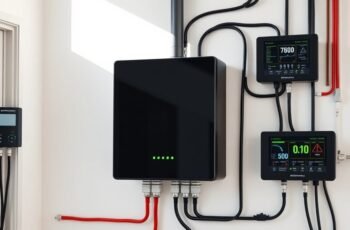
Maintaining commercial lithium battery storage systems requires a disciplined approach to guarantee safety, efficiency, and longevity. Regular inspections, careful monitoring of key indicators, and adherence to proper handling protocols are essential components of effective maintenance. Overlooked or improper practices can lead to degradation, safety hazards, or system failures. Understanding the critical maintenance procedures and identifying early signs of issues are crucial for optimizing performance and avoiding costly downtime, making it imperative to explore the best practices in this evolving field.
Key Takeaways
- Conduct regular visual and operational assessments to detect early signs of degradation like swelling, temperature increases, or capacity loss.
- Maintain systematic monitoring of voltage, temperature, and state of charge to identify irregular patterns and overall battery health.
- Perform routine cleaning with appropriate materials, inspect electrodes, and ensure environmental controls to extend battery lifespan.
- Follow proper charging protocols, avoid overvoltage or undervoltage, and analyze temperature and voltage profiles to prevent damage.
- Document inspections, maintenance activities, and environmental conditions to ensure safety, track performance, and support warranty claims.
How Often Should You Inspect Your Lithium Batteries?
How often should you inspect your lithium batteries to guarantee peak performance and safety? Regular inspections are essential to uphold the battery warranty and assure compliance with installation requirements. We recommend conducting visual and operational assessments quarterly, focusing on temperature fluctuations, voltage levels, and physical integrity. These checks help identify early signs of degradation or potential failure. Adhering to manufacturer guidelines ensures inspections align with installation requirements, preventing voided warranties due to neglect or improper handling. Documentation of each inspection aids in tracking performance trends, enabling proactive maintenance. Consistent monitoring reduces the risk of unexpected failures, extends battery lifespan, and maintains safety standards. Ultimately, scheduled inspections form a critical component of effective lithium battery management in commercial settings.
Key Signs of Battery Degradation to Watch For
Identifying signs of battery degradation early is essential for maintaining ideal performance and safety. Changes in battery chemistry often manifest through specific degradation indicators, such as reduced capacity, increased internal resistance, or voltage fluctuations under load. These signs suggest the electrochemical processes are deteriorating, impacting overall efficiency. Monitoring cycle life and state of health metrics provides critical insight into ongoing degradation. Additionally, abnormal temperature increases or swelling can signal compromised cell integrity. Recognizing these indicators allows us to address issues proactively, preventing potential failures or safety hazards. By understanding the direct relationship between battery chemistry and degradation signs, we can implement targeted diagnostics and maintain peak system performance over the battery’s lifespan.
Essential Maintenance Tasks for Lithium Storage Systems
Regular maintenance is critical to ensuring lithium storage systems operate at peak performance and safety. Key tasks include monitoring system voltage, temperature, and state of charge to prevent degradation. We also perform routine inspections for signs of corrosion or swelling, which can compromise safety and efficiency. Proper documentation supports warranty coverage, ensuring any defects are addressed promptly and efficiently. Additionally, establishing a battery recycling protocol is essential for responsible disposal and environmental compliance, especially as batteries reach end-of-life. Maintaining detailed records of maintenance activities helps verify warranty claims and supports system longevity. By systematically executing these tasks, we reduce downtime, optimize performance, and uphold safety standards, ultimately extending the lifespan of lithium storage systems and safeguarding investments.
How to Properly Clean and Handle Lithium Batteries
Proper cleaning and handling of lithium batteries are essential to maintaining their safety and performance, especially given their sensitive chemical composition. To preserve chemical stability, we must avoid contamination and mechanical damage during handling. When cleaning, use non-abrasive, lint-free cloths and neutral solvents to prevent corrosion or residue buildup. Regular electrode inspection is important; look for signs of corrosion, delamination, or physical deformation that could compromise stability. Maintaining a controlled environment minimizes moisture exposure, which can destabilize the electrolyte. Proper handling procedures include wearing protective gear and avoiding punctures or impacts. Ensuring these practices helps sustain the battery’s chemical stability and prolongs its operational lifespan, reducing safety risks associated with compromised electrodes or chemical instability.
Best Practices for Monitoring Battery Performance
Monitoring battery performance effectively requires implementing systematic procedures that track key operational parameters over time. This guarantees early detection of deviations in battery chemistry and optimizes the storage location’s conditions. We recommend regular collection of voltage, current, temperature, and state of charge data to identify performance trends.
- Analyze temperature fluctuations to prevent thermal runaway.
- Track voltage and current profiles to detect capacity fade.
- Evaluate state of health metrics specific to battery chemistry.
- Assess environmental controls within the storage location for consistency.
Common Issues Caused by Poor Maintenance and How to Prevent Them
Poor maintenance can accelerate battery degradation, leading to reduced capacity and shorter service life. Additionally, neglecting proper procedures increases safety hazards, such as thermal runaway or electrical faults. To prevent these issues, consistent monitoring and adherence to maintenance protocols are essential.
Battery Degradation Risks
How does neglecting maintenance accelerate battery degradation in commercial lithium storage systems? Poor maintenance disrupts electrode stability and thermal management, leading to accelerated capacity loss and lifespan reduction. Inadequate thermal regulation causes temperature fluctuations that compromise electrode integrity, increasing internal resistance. Additionally, overlooking regular checks allows buildup of contaminants, which impair ion flow and electrode function. These issues exacerbate degradation pathways, reducing overall efficiency. To mitigate these risks, it’s critical to monitor and optimize thermal management systems and ensure electrode surfaces remain stable and clean. Addressing these factors promptly maintains performance and extends battery life.
- Insufficient cooling amplifies thermal stress, damaging electrode interfaces
- Contaminants promote unwanted side reactions, degrading electrode materials
- Poor balancing causes uneven electrode wear and capacity fade
- Lack of regular diagnostics delays detection of early degradation signs
Safety Hazards Increase
Neglecting proper maintenance of commercial lithium battery storage systems considerably increases safety hazards, primarily through the heightened risk of thermal runaway, fires, and explosions. Poor maintenance compromises chemical stability, as impurities and degradation products can destabilize electrolyte composition. Inadequate thermal management exacerbates heat accumulation, reducing the system’s ability to dissipate energy safely. Without routine inspections and proper cooling, localized hotspots can develop, triggering thermal runaway. These conditions threaten both personnel safety and infrastructure integrity. Ensuring consistent monitoring of temperature profiles and electrolyte conditions preserves chemical stability and prevents dangerous thermal escalation. Proper thermal management systems and regular maintenance protocols are essential to mitigate these risks, maintaining safe operation and preventing catastrophic failures caused by overlooked safety hazards.
Safety Precautions During Battery Maintenance
Ensuring safety during battery maintenance is critical to prevent accidents and equipment damage. Proper protocols minimize risks associated with high voltage and chemical hazards. We emphasize the use of personal protective equipment (PPE), including insulated gloves, eye protection, and flame-resistant clothing, to safeguard personnel. Additionally, establishing clear emergency procedures guarantees rapid response to incidents such as chemical leaks or electrical shocks.
Key safety measures include:
- Verifying battery isolation and de-energization before maintenance.
- Conducting thorough risk assessments prior to work.
- Maintaining accessible emergency shutoff and spill containment kits.
- Training staff regularly on PPE use and emergency protocols.
Adhering to these precautions reduces exposure to hazards, ensuring a safe, controlled maintenance environment.
Tips for Extending the Lifespan of Your Lithium Battery Storage System
Maintaining ideal performance and longevity of lithium battery systems requires consistent monitoring, disciplined charging practices, and controlled environmental conditions. Regularly evaluating battery health allows us to identify early signs of degradation, while proper charging prevents undue stress and capacity loss. Additionally, managing temperature and humidity levels minimizes environmental impacts that can accelerate aging and reduce lifespan.
Regular Battery Monitoring
How can regular monitoring of lithium batteries substantially extend their lifespan? By continuously evaluating parameters like battery capacity and tracking charging cycles, we can identify early signs of degradation. This proactive approach prevents overuse and maintains ideal performance. Monitoring helps detect capacity fade, ensuring the battery isn’t pushed beyond its safe operational limits. It also facilitates timely maintenance, reducing the risk of sudden failures. Consistent data collection enables us to optimize usage patterns, preserving the number of effective charging cycles. Ultimately, vigilant monitoring preserves both the capacity and overall health of the storage system, maximizing operational efficiency and lifespan.
- Tracking capacity decline over time
- Monitoring voltage and current consistency
- Detecting irregular charging/discharging patterns
- Recording cycle counts for predictive maintenance
Proper Charging Practices
Proper charging practices are critical for maximizing the lifespan of lithium battery storage systems, as improper charging can accelerate capacity fade and degrade cell health. Limiting the number of full charging cycles reduces mechanical stress and prolongs operational life. Maintaining ideal voltage regulation during charging is essential; overvoltage accelerates electrolyte decomposition and increases electrode degradation, while undervoltage hampers capacity recovery. Implementing regulated charging protocols ensures cells operate within safe voltage ranges, minimizing internal resistance buildup. Consistent adherence to manufacturer-recommended charge parameters prevents undue strain on battery components. Additionally, avoiding rapid charging beyond specified rates reduces thermal and electrochemical stress, preserving cell integrity. These practices collectively help sustain capacity retention and extend the functional lifespan of lithium battery systems.
Environmental Control Measures
Controlling the environment around your lithium battery storage system considerably influences its operational longevity. Environmental impact factors, such as temperature, humidity, and air quality, directly affect battery performance and lifespan. Maintaining ideal conditions minimizes degradation and ensures regulatory compliance with safety standards. Effective environmental control reduces the risk of thermal runaway, corrosion, and other failure modes.
- Implement temperature regulation systems to maintain stable operating conditions
- Use humidity control to prevent moisture-related damage and corrosion
- Ensure proper ventilation to dissipate heat and maintain air quality
- Regularly monitor environmental parameters to identify deviations early
Frequently Asked Questions
How Do Temperature Fluctuations Affect Lithium Battery Lifespan?
Temperature fluctuations accelerate thermal regulation challenges, leading to uneven battery aging. We observe that maintaining stable temperatures prolongs lithium battery lifespan by reducing stress and degradation, ensuring ideal performance and durability over time.
What Are the Environmental Considerations for Lithium Battery Disposal?
We follow strict recycling protocols and disposal regulations to minimize environmental impact, ensuring lithium batteries are safely processed. Proper disposal prevents hazardous material leakage, promotes sustainability, and complies with legal standards, safeguarding ecosystems and public health.
Can You Upgrade or Retrofit Existing Lithium Storage Systems?
Sure, we can upgrade or retrofit lithium storage systems, often involving advanced battery monitoring and seamless system integration, enhancing capacity and lifespan. Ironically, these upgrades sometimes reveal overlooked inefficiencies, prompting deeper technical analysis for ideal system performance.
How Does Cycling Impact Lithium Battery Longevity?
Cycling causes battery degradation through repeated charge cycles, gradually reducing capacity and lifespan. We analyze how frequent cycling accelerates deterioration, emphasizing the importance of balancing charge cycles to optimize lithium battery longevity and maintain system efficiency.
What Certifications Should Maintenance Personnel Have?
We guarantee maintenance personnel hold certifications aligned with standards like IEC 62443 and NFPA 70E, complemented by rigorous safety training, to uphold technical integrity, ensure safety, and comply with industry regulations during lithium battery storage system upkeep.
Conclusion
By maintaining consistent inspection routines, monitoring key indicators, and adhering to safety protocols, we guarantee our lithium battery systems operate reliably, efficiently, and safely. Preventing degradation, addressing issues early, and practicing proper handling extend lifespan, optimize performance, and reduce risks. Through meticulous care, continuous diagnostics, and disciplined maintenance, we build resilient energy storage solutions that meet demanding operational standards, safeguarding investments and supporting sustainable energy goals with precision and confidence.