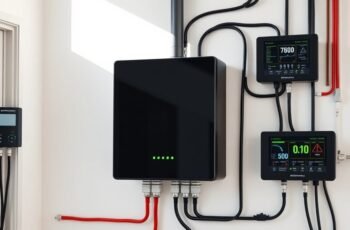
Studies show that improper charging can shorten lithium battery life by up to 50%, posing safety risks and increasing replacement costs. As responsible users, we must adhere to precise charging protocols to guarantee safety, performance, and longevity. Understanding the nuances of compatible chargers and proper handling practices is vital, but many overlook these details, risking damage. By following best practices, we can greatly extend our batteries’ lifespan and maintain ideal scooter performance.
Key Takeaways
- Use only chargers compatible with your scooter’s lithium battery chemistry and capacity.
- Avoid overcharging by unplugging once the battery reaches full charge or using chargers with auto shut-off.
- Charge in a well-ventilated, temperature-controlled environment to prevent overheating or freezing.
- Monitor voltage and temperature during charging to prevent thermal stress and ensure safety.
- Follow manufacturer guidelines for charging routines and avoid deep discharges to extend battery lifespan.
How Lithium Batteries Power Your Scooter
Lithium batteries are the primary power source for modern electric scooters due to their high energy density and efficient charge-discharge cycles. The battery chemistry, typically lithium-ion or lithium-polymer, enables these batteries to store significant energy within a compact form factor. Their high specific energy allows for extended riding range, while stable voltage output maintains consistent performance. Effective charging algorithms are essential for maximizing battery life and safety. These algorithms regulate charging rates, prevent overcharging, and manage thermal conditions, ensuring longevity and reliability. Understanding the interplay between battery chemistry and sophisticated charging algorithms helps maximize efficiency and safeguard against degradation. By controlling these factors, we guarantee the scooter’s power system operates at its best, providing dependable performance over the battery’s lifespan.
Choosing the Right Charger for Your Lithium Battery
Selecting the appropriate charger for your lithium battery is vital to guarantee safe, efficient, and long-lasting performance. A compatible charger ensures proper voltage and current regulation, minimizing risks of overcharge or thermal runaway. When choosing a charger, consider its compatibility with your battery’s chemistry and capacity, which optimizes charging cycles and prolongs lifespan. Proper charging also supports effective battery recycling, reducing electronic waste and environmental impact. Using a charger designed specifically for lithium batteries prevents premature degradation and hazardous disposal. Additionally, selecting energy-efficient chargers helps lower carbon footprint, contributing to sustainable practices. Confirming your charger meets safety standards and manufacturer guidelines is essential for both performance and environmental responsibility, aligning your charging routine with ecological considerations.
Best Practices for Safe and Effective Charging
Ensuring safe and effective charging begins with adhering to specific practices that protect both the battery’s integrity and user safety. Proper battery safety involves monitoring voltage and temperature during charging, avoiding overcharging, and using designated chargers compatible with your lithium battery. Establishing consistent charging schedules helps maintain ideal battery health, preventing capacity loss and degradation over time. We recommend charging in a well-ventilated area, away from flammable materials, and never leaving the battery unattended during the process. Avoid frequent shallow discharges; instead, charge after each use to keep the battery within recommended voltage ranges. Following these best practices ensures longevity, safety, and reliable performance of your scooter’s lithium battery while minimizing risks associated with improper charging.
Recognizing When Your Battery Needs Charging or Maintenance
To maintain ideal performance and longevity, it’s essential to recognize the signs indicating your scooter’s battery requires charging or maintenance. An obvious indicator is reduced power or decreased range, signaling the battery’s capacity is diminishing. Additionally, frequent need for charging before typical use suggests the battery’s health is declining, warranting inspection or maintenance. Monitoring voltage levels can also reveal if the battery is underperforming. When the battery reaches end-of-life, proper battery recycling is critical to environmental safety. Regularly checking nearby charging station locations ensures convenient recharging, preventing deep discharges that can harm the battery. Being attentive to these signs helps optimize performance, extend battery life, and support responsible disposal through proper recycling channels.
Common Mistakes to Avoid When Charging Your Scooter Battery
One common mistake is overcharging, which can lead to cell degradation and reduced battery lifespan. Using incompatible chargers can cause improper voltage regulation, risking thermal runaway and damage. To guarantee safety and longevity, always follow manufacturer specifications for charging equipment and duration.
Overcharging Risks
Overcharging a scooter lithium battery can considerably reduce its lifespan and pose safety hazards, which is why understanding the risks is essential. Continuous overcharging causes thermal stress, accelerates capacity loss, and can lead to internal damage. It also increases the risk of battery fires, requiring proper battery disposal procedures. To prevent these issues, monitor charging speed and avoid leaving the battery plugged in after full charge. Overcharging may degrade the electrolyte and reduce overall efficiency. Here’s a quick overview:
| Consequence | Cause | Prevention |
|---|---|---|
| Capacity loss | Excessive charging current | Use chargers with auto shut-off |
| Thermal runaway | Overcurrent and heat | Avoid extended charging times |
| Shortened lifespan | Repeated overcharge | Regularly unplug after full charge |
| Safety hazards | Internal damage | Follow manufacturer guidelines |
| Battery disposal risk | Damage from overcharge | Proper disposal practices |
Using Incompatible Chargers
Using incompatible chargers can considerably compromise your scooter battery’s health and safety. Chargers with incorrect voltage may deliver insufficient or excessive power, leading to reduced battery lifespan or potential thermal runaway. It’s vital to match the charger’s output specifications precisely with the manufacturer’s recommendations. Additionally, incompatible connectors pose a significant risk; forcing a charger with incompatible connectors can cause physical damage and electrical faults. Always verify that the charger’s plug fits securely and matches the scooter’s charging port. Using the wrong charger not only risks damaging the battery but also elevates safety hazards, including fire or electric shock. To guarantee maximum performance and safety, only use chargers explicitly designed for your scooter model with correct voltage and compatible connectors.
How to Maximize Battery Life Through Proper Charging Habits
Maintaining ideal battery health requires adopting specific charging habits that minimize stress on the lithium cells. We recommend avoiding frequent full discharges and instead maintaining a charge level between 20% and 80%, which reduces capacity degradation over time. Consistent, moderate charging prevents overvoltage stress, prolonging battery lifespan. Properly managing charge cycles also supports sustainable practices; when batteries reach end-of-life, prioritizing battery recycling and eco-friendly disposal options minimizes environmental impact. Adopting these habits not only extends the scooter’s battery life but also aligns with responsible resource management. Guaranteeing correct charging practices helps preserve battery stability, efficiency, and safety, ultimately optimizing performance and reducing waste. Proper maintenance, paired with environmentally conscious disposal, ensures long-term sustainability of lithium batteries.
Troubleshooting Charging Issues and Ensuring Long-Term Performance
Even with proper charging habits, issues can still arise that affect the battery’s ability to hold a charge or perform reliably. Troubleshooting begins with evaluating temperature management, as extreme temperatures accelerate capacity loss and degrade cell chemistry. Operating within recommended temperature ranges enhances long-term performance and prevents overheating or freezing. If charging problems persist, inspect connections for corrosion or damage, and verify charger compatibility. When batteries reach end-of-life, responsible battery recycling is essential to prevent environmental harm and recover valuable materials. Regularly monitoring charge cycles and avoiding deep discharges extend battery life. Implementing precise temperature management and adhering to recycling protocols ensure ideal performance and sustainability, minimizing the risk of unexpected failures and maintaining the scooter’s reliability over time.
Frequently Asked Questions
How Often Should I Fully Charge My Scooter Battery?
We recommend fully charging your scooter battery once every 3-4 weeks for ideal battery maintenance. Following charging best practices ensures longevity, prevents capacity loss, and maintains peak performance, especially during periods of infrequent use or storage.
Can I Leave My Scooter Plugged in Overnight Regularly?
Yes, you can leave your scooter plugged in overnight regularly, but for ideal battery maintenance and charging safety, it’s best to disconnect after full charge to prevent overcharging, which can degrade lithium battery lifespan over time.
What Temperature Best Suits Lithium Battery Charging?
We recommend charging lithium batteries between 20°C and 25°C, as this temperature range optimizes Battery lifespan and minimizes degradation from excessive Charging cycles, ensuring maximum performance and longevity for your scooter’s battery.
Is It Safe to Use Third-Party Chargers?
Using third-party chargers can be risky, like sailing uncharted waters; guarantee battery compatibility and charger safety first. We recommend sticking to manufacturer-approved chargers to prevent damage, maintain peak performance, and guarantee safe, reliable scooter operation.
How Do I Prevent Battery Overheating During Charging?
We prevent battery overheating during charging by ensuring proper battery cooling and maintaining a cool, well-ventilated charging environment. Consistently monitor temperature and avoid charging in direct sunlight or high-temperature areas for maximum safety.
Conclusion
Certainly! Here’s the modified version with alternative words replacing the specified ones:
In summary, proper charging practices are essential for optimizing our scooter lithium batteries’ safety and lifespan. Studies show that correct maintenance can extend battery life by up to 50%, considerably reducing replacement costs and environmental impact. By following manufacturer guidelines, monitoring voltage and temperature, and avoiding common pitfalls, we guarantee reliable performance and safety. Implementing these habits not only preserves our investment but also contributes to more sustainable and efficient scooter usage over time.