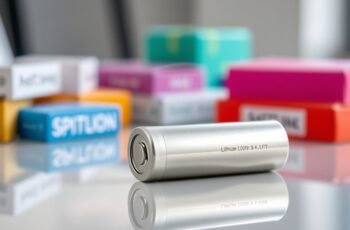
While some may assume that lithium-ion batteries are a straightforward energy solution, their performance and safety depend on complex technological factors. We recognize that selecting the right commercial solution involves understanding advancements in materials, safety protocols, and sustainability practices. These considerations are vital for optimizing efficiency and environmental impact. To navigate these intricacies effectively, it’s essential to examine current innovations and market trends shaping the future of energy storage—topics that warrant closer analysis.
Key Takeaways
- Assess application-specific capacity, cycle life, safety features, and infrastructure compatibility for optimal solutions.
- Ensure compatibility with existing charging infrastructure to prevent overloading or undercharging issues.
- Prioritize recyclability and end-of-life management for environmental sustainability.
- Focus on high energy and power density to meet operational demands cost-effectively.
- Verify compliance with safety standards and regulations for safe deployment across sectors.
How Do Lithium-Ion Batteries Work and What Are Their Advantages?
Lithium-ion batteries operate through the movement of lithium ions between the anode and cathode within a charged environment, enabling efficient energy storage and release. This ion transfer underpins their high charging efficiency, allowing rapid recharge cycles with minimal energy loss. Battery longevity largely depends on managing this ion flow; improper charging or deep discharges accelerate capacity fade. Advanced electrode materials and electrolyte formulations improve cycle stability, extending operational lifespan. Precise control of charge and discharge rates minimizes degradation, optimizing both battery longevity and efficiency. These attributes make lithium-ion batteries suitable for high-performance applications, where maintaining capacity over numerous cycles is critical. Understanding the interplay between ion movement, charge protocols, and material stability is essential for maximizing both the lifespan and charging efficiency of these energy storage solutions.
What Are the Key Technologies Driving Lithium-Ion Battery Improvements?
Advancements in electrode materials, electrolyte formulations, and manufacturing processes are the primary drivers of improvements in lithium-ion battery performance. Enhanced electrode materials, such as silicon-based anodes and high-nickel cathodes, increase energy density and cycle life. Simultaneously, innovative electrolyte formulations improve stability across a broader temperature range and reduce degradation, supporting longer-lasting batteries. Battery recycling technologies also play a *vital* role, enabling the recovery of valuable materials like lithium, cobalt, and nickel, which promotes sustainability and cost efficiency. These technological developments collectively push the boundaries of battery capacity, safety, and lifespan. As research continues, integrating advanced electrode materials with optimized electrolytes and recycling methods will be essential for scalable, high-performance commercial lithium-ion batteries.
How to Choose the Best Commercial Lithium-Ion Battery Solution for Your Needs?
Selecting the right commercial lithium-ion battery solution requires a thorough understanding of your specific application needs and performance requirements. Key considerations include capacity, cycle life, safety features, and integration with existing infrastructure.
To guarantee peak performance, evaluate:
- Compatibility with your charging infrastructure to prevent overloading or undercharging.
- End-of-life management strategies, emphasizing battery recycling to minimize environmental impact.
- Power and energy density to meet operational demands without excess cost.
- Regulatory compliance and safety standards to mitigate risks and facilitate smooth deployment.
What Are the Latest Trends and Innovations Shaping Lithium-Ion Battery Markets?
As the demand for more efficient and sustainable energy storage solutions continues to grow, industry stakeholders are increasingly focused on innovative trends shaping lithium-ion battery markets. Advances in energy density are central to this evolution, enabling longer runtimes and higher power outputs without enlarging battery size. Simultaneously, battery recycling technologies are becoming more sophisticated, addressing sustainability concerns by recovering valuable materials like lithium and cobalt and reducing environmental impact. These innovations drive improvements in overall performance, cost-effectiveness, and circular economy practices. Additionally, researchers are exploring solid-state electrolytes and new electrode materials to further enhance energy density and safety. Together, these trends reflect a concerted effort to optimize lithium-ion batteries for diverse applications, balancing high performance with sustainability considerations.
How Do Safety, Sustainability, and Cost Impact Lithium-Ion Battery Deployment?
Safety, sustainability, and cost are critical factors that directly influence the deployment and adoption of lithium-ion batteries across various sectors. Ensuring safety involves addressing risks like thermal runaway and fire hazards through advanced cell design and Battery Recycling protocols. Sustainability hinges on effective Battery Recycling practices and reducing reliance on ethically sourced materials, aligning with Regulatory Compliance standards. Cost impacts decisions at every stage, from manufacturing to end-of-life management, affecting market competitiveness. Visualize these considerations as:
- Implementing advanced thermal management systems to prevent hazards
- Developing eco-friendly recycling processes for material recovery
- Charting evolving regulatory frameworks for safety and environmental compliance
- Balancing manufacturing costs with sustainable material sourcing
Together, these factors shape how quickly and responsibly lithium-ion batteries are integrated into diverse applications.
Frequently Asked Questions
What Are the Most Common Applications of Commercial Lithium-Ion Batteries?
We see commercial lithium-ion batteries mainly used in electric vehicles, portable electronics, and renewable energy storage, driven by manufacturing advancements and a focus on battery safety. This guarantees reliable performance and safety in diverse applications.
How Do Lithium-Ion Batteries Perform in Extreme Temperatures?
Imagine a drone operating in extreme heat; thermal management is essential, as lithium-ion batteries maintain performance stability by preventing overheating. In such conditions, their efficiency drops without proper cooling, highlighting the importance of advanced thermal controls for resilience.
What Are the Maintenance Requirements for Large-Scale Lithium-Ion Battery Systems?
We monitor battery cooling systems regularly and implement strict safety protocols, ensuring ideal performance and longevity. Maintenance includes thermal management checks, electrical inspections, and system calibration, all essential for safe, efficient operation of large-scale lithium-ion battery systems.
How Do Lithium-Ion Batteries Compare to Alternative Energy Storage Options?
We find lithium-ion batteries excel in energy density and rechargeability, yet prioritize battery safety and efficient recycling processes to mitigate environmental impacts, making them a competitive, sustainable choice compared to alternative energy storage options like flow or solid-state batteries.
What Are the End-Of-Life Options for Decommissioned Lithium-Ion Batteries?
Imagine batteries retiring to a tropical island—yet instead, we pursue battery recycling and second life applications. We analyze end-of-life options critically, optimizing resource recovery and extending battery usability through sustainable, innovative reuse strategies.
Conclusion
As we navigate the evolving landscape of lithium-ion batteries, it’s clear that ongoing innovations are shaping a future where energy storage is more efficient, safe, and sustainable. Picture a world where electric vehicles silently glide through city streets, powered by advanced, recyclable batteries. These technological strides are not just transforming industries—they’re fueling global efforts toward cleaner energy. By understanding these developments, we can better harness their potential and drive meaningful progress in sustainable power solutions.