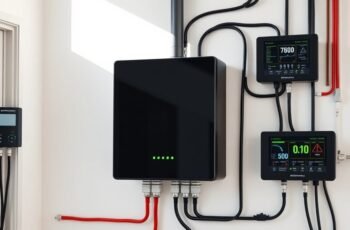
Setting up an off-grid lithium battery inverter system requires precise component selection and meticulous installation to guarantee safety and efficiency. We need to carefully match batteries with the right chemistry and capacity, choose an inverter suited to our load demands, and implement proper wiring and grounding practices. Understanding these technical details is essential, but the real challenge lies in optimizing the system for longevity and performance—something that becomes clearer as we explore each step in detail.
Key Takeaways
- Match inverter wattage and surge capacity to your load requirements for reliable power delivery.
- Ensure inverter compatibility with lithium battery voltage, chemistry, and system components.
- Properly install in a ventilated, dry location with correct wiring, grounding, and safety disconnects.
- Configure inverter settings for lithium chemistry, including voltage limits and thermal management.
- Regularly inspect connections, update firmware, and monitor system performance for longevity and safety.
Understanding the Basics of Off-Grid Lithium Battery Systems
Off-grid lithium battery systems are a crucial component of autonomous energy setups, providing dependable power storage independent of the utility grid. Understanding the basics involves examining battery chemistry, which influences capacity, lifespan, and safety. Lithium-ion batteries, known for high energy density and long cycle life, are the preferred choice due to their stability and performance. In addition, inverter efficiency plays a key role; it determines how effectively stored energy converts from DC to AC power. High-quality inverters minimize energy losses, maximizing usable power output. Proper system design ensures suitable compatibility between battery chemistry and inverter efficiency, leading to reliable, efficient energy storage and supply. This foundational knowledge is essential for building a resilient, maintenance-friendly off-grid lithium battery setup.
Selecting the Right Lithium Batteries for Your Power Needs
Choosing the appropriate lithium batteries is crucial for guaranteeing your off-grid system meets your energy demands efficiently and reliably. Key considerations include battery chemistry, which impacts cycle life, safety, and performance, and energy storage capacity, critical for matching your load requirements. Selecting batteries with suitable voltage and amp-hour ratings ensures ideal system integration.
| Battery Chemistry | Energy Storage Capacity | Cycle Life |
|---|---|---|
| Lithium Iron Phosphate (LiFePO4) | High | Long-lasting |
| Lithium Nickel Manganese Cobalt (NMC) | Moderate to High | Moderate |
| Lithium Manganese Oxide (LMO) | Lower | Shorter |
| Lithium Titanate (LTO) | Very high | Extended |
This table helps compare chemistries and storage features essential for your off-grid setup.
Choosing an Inverter That Fits Your Off-Grid Setup
Selecting the appropriate inverter involves evaluating your system’s power requirements and guaranteeing compatibility with your battery bank. It’s essential to match the inverter’s continuous and surge wattage to your anticipated load demands. Consider whether your setup supports pure sine wave or modified sine wave inverters, as this impacts device compatibility. Solar panel integration is critical; choose an inverter with suitable MPPT charge controllers or direct compatibility to optimize energy harvest. Proper inverter placement is equally important—install it in a ventilated, dry location away from direct sunlight to prevent overheating and facilitate maintenance. Compatibility with your battery voltage and capacity must be verified to avoid system inefficiencies or damage. A well-chosen inverter ensures seamless power conversion and efficient off-grid operation.
Connecting Batteries, Inverter, and Charge Controllers Safely
To ensure a safe and reliable system, we must carefully connect the batteries, inverter, and charge controllers using proper wiring techniques and adherence to electrical standards. Proper wiring ensures efficient energy flow, minimizes fire risks, and supports wireless monitoring capabilities. Use appropriate wire gauges, secure connections, and proper grounding to enhance safety and system longevity. An aesthetic design is achievable through organized wiring routes and concealed connections, improving both functionality and appearance. Additionally, verify polarity and insulation to prevent shorts and damage.
| Component | Connection Consideration |
|---|---|
| Batteries | Correct polarity, secure terminals |
| Inverter | Proper grounding, correct wiring |
| Charge Controllers | Accurate wiring, safety disconnects |
| Wireless Monitoring | Use compatible, shielded communication |
Configuring Your System for Optimal Performance and Efficiency
Have you optimized your lithium battery inverter system to achieve maximum performance and efficiency? Proper configuration hinges on understanding battery chemistry, which influences charging parameters, voltage thresholds, and thermal management strategies. Selecting inverter features tailored to lithium chemistry—such as programmable voltage limits, advanced cooling, and high surge capacity—ensures safe, reliable operation. To maximize efficiency, fine-tune inverter settings for low idle power consumption, and program battery management system (BMS) parameters for ideal charge/discharge cycles. Use precise cable sizing and robust connectors to minimize resistive losses. Regularly monitor system performance through inverter diagnostics and data logging, allowing adjustments that enhance longevity and output. This meticulous setup aligns hardware capabilities with battery chemistry characteristics, ensuring your off-grid system operates at peak performance with reduced energy waste.
Ensuring Safety and Preventing Common Setup Mistakes
To guarantee safety and avoid common setup errors, we focus on proper wiring techniques, accurate battery sizing, and safe installation practices. Each step must follow manufacturer specifications and electrical standards to prevent damage or hazards. Attention to these details is critical for a reliable and secure off-grid lithium battery inverter system.
Proper Wiring Techniques
Ensuring proper wiring techniques is essential for both safety and system efficiency when setting up an off-grid lithium battery inverter. Correct wiring begins with understanding the battery chemistry, as lithium batteries require specific connections to prevent thermal runaway and longevity. When selecting inverter types, it’s crucial to match the inverter’s specifications with the battery system’s voltage and current ratings. Use appropriately rated conductors, and maintain tight, secure connections to prevent resistance buildup and overheating. Proper fusing and circuit protection are vital, especially near the inverter’s input and output terminals. Always follow manufacturer guidelines for wiring sequences and grounding procedures. Precise wiring practices minimize risks of short circuits, equipment damage, and safety hazards, ensuring a reliable and efficient off-grid power system.
Correct Battery Sizing
Selecting the correct battery size is critical for maintaining system safety and avoiding common setup errors. Proper sizing guarantees the battery bank can handle the inverter’s load without overtaxing individual cells, which could shorten battery lifespan. An undersized system risks frequent deep discharges, reducing battery longevity and increasing replacement costs over time. Conversely, an oversized bank may lead to unnecessary initial costs, impacting overall project budget. Precise calculations based on your energy consumption, inverter capacity, and efficiency are essential. We must balance these factors to optimize lifespan and control costs. Accurate battery sizing not only enhances system reliability but also minimizes the risk of thermal runaway and other safety hazards, making it a foundational step in a safe, efficient off-grid setup.
Safe Installation Practices
Proper installation practices are vital for maintaining safety and preventing common setup errors in off-grid lithium battery inverter systems. Correct handling of battery chemistry, such as lithium iron phosphate, minimizes risks like thermal runaway. Confirming proper wire gauge and secure connections prevents voltage drops and electrical faults that could void inverter warranties. Adequate ventilation and temperature control are essential to avoid overheating and preserve system longevity. Additionally, adherence to manufacturer guidelines guarantees compatibility and safety standards.
- Use appropriate fuse and breaker ratings for both battery and inverter
- Follow manufacturer instructions to verify compatibility with battery chemistry
- Regularly inspect wiring and connections for corrosion or looseness
- Maintain proper ventilation to prevent overheating and extend system lifespan
Maintaining Your Lithium Battery Inverter System Over Time
Regular maintenance is essential to guarantee the longevity and reliable performance of your lithium battery inverter system. Consistent inverter maintenance includes inspecting connections for corrosion, ensuring cooling systems operate effectively, and verifying system firmware is up to date. Properly managing battery recycling protocols ensures environmentally responsible disposal of aged or damaged cells, preventing potential hazards. Monitoring voltage levels and state of charge helps optimize battery lifespan and system efficiency. Regularly cleaning terminals and vents prevents dust buildup that could impair performance. These practices reduce the risk of system failure and extend operational life. Adhering to precise maintenance schedules not only sustains system reliability but also aligns with environmental standards, emphasizing responsible disposal and recycling of lithium batteries at end-of-life stages.
Troubleshooting Common Issues in Off-Grid Lithium Inverter Systems
When issues arise in an off-grid lithium inverter system, prompt and accurate troubleshooting can prevent prolonged downtime and potential damage. Common problems include inverter fault codes, unusual noise, or inconsistent power output. To address these, verify inverter firmware is up to date, as outdated firmware can cause system errors. Check for battery recycling issues, ensuring batteries are properly balanced and not degraded. Examine wiring connections and fuses for corrosion or looseness. If the system still malfunctions, consult the inverter’s diagnostic logs for specific error codes. Regularly updating firmware and maintaining proper battery recycling practices helps prevent issues. Troubleshooting systematically ensures reliable operation, prolongs system lifespan, and maintains overall efficiency.
Frequently Asked Questions
How Long Do Lithium Batteries Typically Last in Off-Grid Systems?
Lithium batteries generally last 10-15 years in off-grid systems, depending on usage and maintenance. Proper maintenance tips like avoiding deep discharges and monitoring temperature can maximize battery lifespan and guarantee peak performance over time.
Can I Expand My System Capacity Easily Later On?
Yes, we can expand system capacity easily later on by considering battery maintenance and cost comparison; modular lithium battery systems facilitate scalability, allowing us to add more cells efficiently without extensive reconfiguration, optimizing long-term investment and performance.
What Are the Best Ways to Monitor System Performance Remotely?
Ever wondered how to keep tabs on your system remotely? We use wireless sensors integrated with mobile apps, providing real-time data and alerts, ensuring precise monitoring and quick troubleshooting without needing physical access to the inverter setup.
How Do Temperature Fluctuations Affect Lithium Battery Performance?
Temperature fluctuations considerably impact lithium battery performance due to temperature sensitivity, which can reduce capacity and lifespan. Effective thermal management maintains ideal operating temperatures, ensuring consistent performance and preventing damage caused by extreme heat or cold.
Are There Specific Certifications or Standards to Look for in Equipment?
Like a knight’s armor, we seek certification standards that guarantee safety regulations are met; these verify inverter equipment’s reliability and compliance. Always prioritize certified gear to safeguard performance and adhere to industry safety and quality benchmarks.
Conclusion
By carefully selecting compatible components, following proper installation protocols, and maintaining regular system checks, we guarantee our off-grid lithium battery inverter setup operates efficiently and safely. It’s a coincidence how these practices not only extend battery lifespan but also create a reliable energy source, aligning with our eco-friendly goals. Staying vigilant and proactive allows us to enjoy uninterrupted power, proving that precision and attention to detail truly make all the difference in sustainable off-grid living.