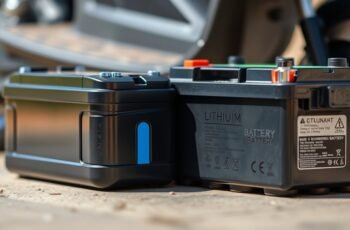
Imagine a future where electric vehicles charge in minutes, last longer, and operate more safely than ever before. As we compare solid-state and lithium-ion batteries, it becomes clear that each technology has distinct advantages and challenges rooted in their design, materials, and manufacturing processes. Understanding these differences is essential for evaluating their potential impact on EV development, but the path to widespread adoption is still filled with complexities that demand closer scrutiny.
Key Takeaways
- Solid-state batteries offer higher energy density, longer lifespan, and improved safety compared to traditional lithium-ion batteries.
- Lithium-ion batteries have established manufacturing processes, lower costs, and a mature recycling infrastructure.
- Solid-state batteries face challenges in scalability, higher production costs, and complex manufacturing methods.
- Solid-state technology provides better thermal stability and resistance to dendrite formation, enhancing safety.
- Lithium-ion batteries are currently more cost-effective, but solid-state batteries are expected to become more viable with technological advancements.
What Are Solid-State and Lithium-Ion Batteries? An Overview
While both solid-state and lithium-ion batteries serve as key energy storage solutions for electric vehicles, they differ markedly in their construction and operational principles. Lithium-ion batteries rely on liquid electrolytes and layered electrode materials, which pose recycling challenges due to hazardous components and complex recovery processes. Conversely, solid-state batteries utilize a solid electrolyte, offering potential advantages in safety and durability. From an environmental impact perspective, solid-state designs promise easier battery recycling and reduced toxic waste, enhancing sustainability. Lithium-ion batteries, however, often involve resource-intensive manufacturing and disposal methods, raising ecological concerns. Understanding these fundamental differences in construction informs not only performance but also the broader implications for battery recycling efficiency and environmental footprint, shaping the future of eco-friendly EV energy storage solutions.
How Do Solid-State and Lithium-Ion Batteries Differ in Design and Materials?
Solid-state and lithium-ion batteries differ fundamentally in their design and choice of materials, reflecting distinct approaches to energy storage. Solid-state batteries utilize a solid electrolyte, which can be ceramic or polymer-based, offering enhanced stability and safety. In contrast, lithium-ion batteries rely on a liquid or gel electrolyte composition, which facilitates ion transport but introduces risks like leakage and thermal runaway. Electrode architecture also varies markedly; solid-state designs often feature compact, layered structures optimized for minimal interfacial resistance, whereas lithium-ion batteries employ porous electrodes to maximize surface area. These material choices influence overall performance, with solid electrolytes enabling higher energy density and longevity, while conventional lithium-ion electrolytes prioritize manufacturing maturity and cost-effectiveness. The fundamental differences in electrolyte composition and electrode architecture underpin each battery type’s unique performance characteristics.
Which Battery Type Offers Better Range and Performance?
Advancements in battery technology have considerably influenced the range and performance of electric vehicles, with solid-state and lithium-ion batteries each offering distinct advantages. Solid-state batteries typically deliver higher energy density, enabling longer driving ranges and quicker charge times, which enhance overall performance. In contrast, lithium-ion batteries are well-established, with mature manufacturing processes and proven longevity. When evaluating environmental impact, solid-state batteries may reduce reliance on scarce materials, easing concerns about battery recycling and resource depletion. Lithium-ion batteries, however, pose challenges related to battery recycling due to hazardous components and material degradation over time. Ultimately, while solid-state batteries promise superior range and performance benefits, their environmental advantages depend on advancements in sustainable manufacturing and recycling techniques, making the full environmental implications complex and ongoing.
What Are the Safety and Reliability Considerations for Each Battery?
The safety and reliability profiles of solid-state and lithium-ion batteries considerably influence their adoption in electric vehicles. Solid-state batteries generally offer superior thermal stability due to their solid electrolytes, reducing risks of thermal runaway and fire. This enhances long-term reliability, as the solid electrolytes are less prone to degradation over time. Conversely, lithium-ion batteries, while well-established, face challenges with thermal management, which can compromise safety and accelerate capacity fade. Their reliance on liquid electrolytes introduces vulnerabilities to leakage and dendrite formation, impacting long-term reliability. Hence, solid-state batteries promise improved safety margins and durability, but their current technological maturity still presents hurdles. Both battery types demand rigorous safety protocols, but solid-state architecture inherently provides a more stable foundation for ensuring reliable EV performance over extended periods.
How Do Manufacturing Costs and Scalability Compare?
Although solid-state batteries promise significant performance benefits, their manufacturing costs currently surpass those of lithium-ion batteries, mainly due to supply chain complexities and production scalability issues. The intricate production processes and rare materials increase costs and hinder mass adoption. To analyze this, consider the following:
| Aspect | Lithium-Ion Batteries | Solid-State Batteries | Key Challenges |
|---|---|---|---|
| Material Costs | Moderate | Higher due to novel, scarce materials | Material scarcity and supply chain issues |
| Production Scalability | Well-established, scalable | Limited, requires new infrastructure | Scaling manufacturing processes |
| Supply Chain Complexities | Mature, streamlined | Emerging, more complex due to materials | Ensuring reliable supply chains |
| Manufacturing Processes | Mature, automated | Complex, still evolving | Reducing process complexity |
| Cost Trends | Decreasing over time | Likely to decrease with technological advances | Investment in R&D needed |
What Challenges Do Solid-State Batteries Face Before Commercial Adoption?
Solid-state batteries face several critical challenges that must be addressed before they can achieve widespread commercial adoption. One major obstacle is thermal management, as solid electrolytes often exhibit limited heat dissipation, risking thermal runaway or performance degradation under high load conditions. Developing effective cooling strategies is essential for safety and longevity. Additionally, recycling challenges pose significant barriers; current recycling infrastructure is optimized for lithium-ion batteries, and the solid-state design complicates material recovery due to diverse and less-understood chemistries. Scaling production also remains an issue, with manufacturing processes needing refinement for consistent quality and cost reduction. Addressing these technical hurdles is essential to liberate the full potential of solid-state batteries in the electric vehicle market, ensuring safety, sustainability, and economic viability.
Which Battery Technology Is Better for Future Electric Vehicle Development?
Evaluating the ideal battery technology for future EV development requires a clear comparison of energy density, safety, durability, cost, and manufacturability. Each factor directly impacts vehicle performance, long-term reliability, and market viability. By systematically analyzing these points, we can determine which technology aligns best with the evolving demands of electric mobility.
Energy Density Comparison
Energy density is a critical factor when evaluating the potential of solid-state versus lithium-ion batteries for future electric vehicle (EV) development. Solid-state batteries generally offer higher volumetric and gravimetric energy densities, enabling longer driving ranges per charge. This enhancement is driven by solid electrolytes’ ability to support denser electrode materials. Conversely, lithium-ion batteries face limitations from liquid electrolytes and safety concerns, which constrain their energy density growth. Additionally, higher energy density impacts battery recycling processes and environmental impact, as denser batteries may contain more active materials requiring efficient recycling methods. Key considerations include:
- Potential for increased energy storage capacity
- Impact on vehicle weight and design flexibility
- Challenges in scaling production for higher density
- Environmental implications related to material recovery and disposal
These factors collectively influence future EV development strategies and sustainability goals.
Safety and Durability
When considering the safety and durability of EV batteries, which technology offers the most reliable solution for future vehicle applications? Solid-state batteries generally demonstrate enhanced safety due to their non-flammable electrolyte, reducing fire risks. They also offer superior durability, with longer cycle life and better resistance to dendrite formation. Lithium-ion batteries, however, are more mature and easier to recycle, impacting environmental sustainability.
| Feature | Solid State Batteries | Lithium-Ion Batteries |
|---|---|---|
| Safety | Higher, reduced fire risk | Moderate, potential thermal runaway |
| Durability | Longer lifespan, better cycling | Good, but limited cycle life |
| Battery Recycling | Emerging, less established | Well-developed |
| Environmental Impact | Lower, due to stability | Higher, due to chemical complexity |
Both technologies have distinct advantages, but solid-state batteries currently lead in safety and durability.
Cost and Manufacturing
While solid-state batteries promise significant safety and durability benefits, their current manufacturing processes are more complex and costly compared to lithium-ion technology. The advanced materials and precise fabrication required increase production expenses and complicate scaling. Additionally, supply chain logistics for solid-state components are less mature, impacting cost efficiency. Factors influencing future viability include:
- Higher raw material costs due to specialized electrolytes
- Limited established pathways for battery recycling and reuse
- Complex synthesis processes that reduce manufacturing throughput
- Uncertain economies of scale compared to mature lithium-ion supply chains
These factors make solid-state batteries less economically competitive presently. Conversely, lithium-ion technology benefits from established manufacturing infrastructure, streamlined supply chains, and ongoing innovations in battery recycling, positioning it as the more cost-effective choice for future EV development.
Frequently Asked Questions
How Long Do Solid-State and Lithium-Ion Batteries Typically Last in EVS?
We find lithium-ion batteries typically last 8-15 years, while solid-state batteries may extend to 15-20 years, due to superior battery longevity and lower maintenance considerations, making them more durable and cost-effective over an EV’s lifespan.
Can Solid-State Batteries Be Recycled More Efficiently Than Lithium-Ion?
We believe solid-state batteries can be recycled more efficiently than lithium-ion due to simpler manufacturing processes and fewer supply chain issues, reducing hazardous waste and improving material recovery, ultimately enhancing sustainability and lowering environmental impact in EV battery lifecycle management.
What Environmental Impacts Are Associated With Each Battery Type?
We find that solid-state batteries have a lower environmental impact due to safer, more resource-sustainable manufacturing processes, whereas lithium-ion batteries involve more resource extraction and hazardous materials, posing greater ecological risks during production and disposal.
Are There Any Ongoing Advancements That Could Change Current Battery Limitations?
Ongoing advancements in battery manufacturing and material durability are revolutionizing EV batteries, potentially overcoming limitations and making them more sustainable and efficient than ever, transforming our expectations for electric vehicle technology and environmental impact.
How Do Charging Times Compare Between Solid-State and Lithium-Ion Batteries?
We find that solid-state batteries potentially enable faster charging due to higher energy density and reduced thermal issues, making them more efficient than lithium-ion variants, which still face limitations in rapid charging capabilities despite ongoing technological improvements.
Conclusion
While lithium-ion batteries currently dominate due to mature manufacturing and lower costs, solid-state batteries promise superior safety, longevity, and energy density—potentially transforming EV technology. Yet, their scalability and high production costs pose significant hurdles. As we weigh these technologies, it’s clear that lithium-ion’s proven infrastructure contrasts sharply with solid-state’s revolutionary potential. The future of EVs hinges on overcoming these challenges, making the choice between proven reliability and innovative promise a critical strategic decision.