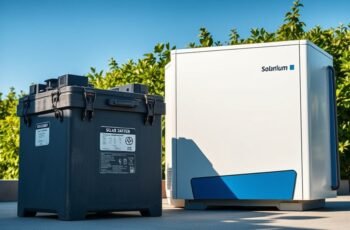
Choosing between LiFePO4 and AGM batteries is like steering through a complex landscape of technological trade-offs, where safety, longevity, and cost intertwine. As we analyze their performance and environmental impacts, it becomes clear that each has distinct advantages suited to different applications. Understanding these nuances can greatly influence your decision-making process, yet many overlook the critical factors that set these battery types apart. Let’s explore the details to determine which option aligns best with your needs.
Key Takeaways
- LiFePO4 batteries offer higher safety, longer cycle life, and better environmental friendliness compared to AGM batteries.
- AGM batteries provide reliable, high surge power suitable for starting engines and backup applications.
- LiFePO4 performs better in cold temperatures and has minimal gas emissions, reducing ventilation needs.
- AGM batteries are generally cheaper upfront but have shorter lifespans and higher maintenance requirements.
- LiFePO4 is ideal for renewable energy, EVs, and off-grid systems, while AGM suits marine, backup, and starter use.
What Are LiFePO4 and AGM Batteries? An Overview of Battery Types
LiFePO4 (Lithium Iron Phosphate) and AGM (Absorbent Glass Mat) batteries represent two distinct chemistries commonly used in various applications, from renewable energy storage to automotive systems. LiFePO4 batteries feature a lithium-based chemistry known for stability, safety, and long cycle life, making them suitable for high-performance applications. AGM batteries utilize a lead-acid chemistry with glass mats that absorb electrolyte, offering reliable, maintenance-free operation. Their battery chemistry influences charging methods: LiFePO4 batteries require specific, controlled charging profiles to prevent overvoltage and thermal stress, whereas AGM batteries typically follow traditional lead-acid charging protocols. Understanding these differences is essential for optimizing performance, ensuring longevity, and selecting appropriate charging strategies for each battery type.
How Do LiFePO4 and AGM Batteries Differ in Performance and Power Output?
While both LiFePO4 and AGM batteries are popular choices for energy storage, their performance characteristics and power output capabilities differ markedly due to their distinct chemistries. LiFePO4 batteries deliver a higher and more consistent power output during discharge, thanks to their stable chemistry and lower internal resistance. This enables faster battery charging and sustained energy storage performance under high loads. Conversely, AGM batteries provide a reliable but lower peak power output, which may limit high-demand applications. Their performance tends to decline more quickly under repeated deep discharges. Overall, LiFePO4 batteries excel in applications requiring high power and efficient energy storage, with better voltage stability during operation, while AGM batteries favor cost-effective, moderate-performance energy storage solutions.
Comparing Lifespan and Durability of Lithium Iron Phosphate and AGM Batteries
When comparing Lifepo4 and AGM batteries, their lifespan and cycle durability are critical factors that influence long-term performance. Lithium Iron Phosphate batteries typically offer higher cycle counts and better resistance to wear, extending their operational life. Understanding these differences helps us evaluate which technology is more suited for demanding applications.
Longevity and Cycle Life
The durability and cycle life of batteries substantially influence their overall longevity, and understanding these factors requires a direct comparison between Lithium Iron Phosphate (LiFePO4) and AGM batteries. LiFePO4 batteries generally offer higher cycle counts, often exceeding 2,000 cycles at 80% depth of discharge, due to their stable chemistry and strict manufacturing standards. AGM batteries typically provide around 500-1,000 cycles, but their lifespan is more sensitive to battery charging practices. The table below compares key parameters:
| Feature | Lifepo4 | AGM | Notes |
|---|---|---|---|
| Cycle Life | >2000 cycles | 500-1000 cycles | Durability influenced by manufacturing standards |
| Depth of Discharge | Up to 80-90% | 50-70% | Affects total cycle count |
| Charging Efficiency | Higher | Moderate | Impacts longevity |
| Temperature Range | Wide | Narrow | Affects performance in extreme conditions |
| Overall Longevity | Superior | Moderate | Due to chemistry and standards |
Resistance to Wear and Tear
Lithium Iron Phosphate (LiFePO4) batteries typically exhibit greater resistance to wear and tear compared to AGM batteries, primarily due to their more stable chemistry and robust manufacturing standards. This stability reduces degradation caused by repeated battery charging cycles, allowing LiFePO4 cells to maintain performance over a longer period. Additionally, manufacturing standards for LiFePO4 batteries emphasize high-quality materials and precise assembly, enhancing durability against physical stresses and temperature fluctuations. AGM batteries, while sealed and maintenance-free, are more susceptible to internal plate shedding and electrolyte stratification, which accelerate wear. As a result, LiFePO4 batteries generally sustain less capacity loss and structural damage over time, making them more reliable in demanding applications that require consistent performance and longevity despite frequent cycling and challenging conditions.
Safety Considerations: Which Battery Type Is Safer for Your Use?
When evaluating safety, we consider the fire risk associated with both Lifepo4 and AGM batteries, noting that Lifepo4 cells are inherently more stable and less prone to thermal runaway. Handling procedures differ, with Lifepo4 batteries requiring minimal ventilation and special precautions, whereas AGM batteries can emit flammable gases if damaged or improperly charged. Analyzing these factors helps determine which battery type offers a safer solution for specific applications.
Risk of Fire
Although both Lifepo4 and AGM batteries are generally considered safe, their risk profiles for fire differ markedly due to their chemical compositions and design characteristics. Lifepo4 batteries tend to have a lower risk of thermal runaway because of their stable chemistry, reducing fire hazards. Their battery aesthetics are often sleek, with robust casing that minimizes external damage, further decreasing fire risk. In contrast, AGM batteries, while sealed and spill-proof, can pose a higher fire risk if damaged or improperly charged, especially given their faster charging speeds that generate more heat. The increased heat during rapid charging can compromise internal seals, elevating fire potential. Overall, Lifepo4’s inherent stability offers a safer profile, particularly when considering the impact of charging speed on thermal safety.
Handling Requirements
Handling procedures considerably influence the overall safety of Lifepo4 and AGM batteries, especially considering their distinct chemical and structural characteristics. Lifepo4 batteries, with their stable battery chemistry, are less prone to thermal runaway, reducing the risk of accidents during handling. AGM batteries, however, contain sulfuric acid and are more sensitive to physical damage, necessitating careful handling to prevent leaks or short circuits. Proper adherence to charging protocols is essential for both types; Lifepo4 batteries require specific voltage limits to avoid overcharging, while AGM batteries demand careful management of charging currents to prevent overheating. Ensuring appropriate handling, including protective equipment and correct procedures, minimizes safety risks associated with chemical exposure and mechanical damage, making Lifepo4 batteries inherently safer when proper protocols are followed.
Ventilation Needs
Have you considered how ventilation requirements influence the safety profiles of Lifepo4 and AGM batteries? Proper ventilation is essential during battery charging and storage, as it mitigates the risk of heat buildup and gas accumulation. Lifepo4 batteries produce minimal gases and require less ventilation, making them safer in enclosed spaces. AGM batteries, however, can emit hydrogen during overcharge or faulty operation, demanding enhanced ventilation for safe storage techniques.
| Battery Type | Gas Emissions | Ventilation Needs | Safety Implications |
|---|---|---|---|
| Lifepo4 | Minimal | Low | Safer with limited ventilation |
| AGM | Hydrogen | High | Requires well-ventilated storage |
| Both | Varies | During charging | Proper ventilation reduces risk |
Cost Breakdown: Is a LiFePO4 Battery Worth the Investment Over AGM?
When evaluating the cost-effectiveness of LiFePO4 batteries compared to AGM options, it’s essential to take into account both initial investment and long-term value. LiFePO4 represents advanced battery technology, offering superior energy storage capabilities and longevity. Although its upfront cost is higher, its longer cycle life reduces replacement frequency, ultimately lowering total lifecycle expenses. AGMs, while cheaper initially, tend to degrade faster and require more frequent replacement, increasing maintenance costs over time. We must analyze the initial capital expenditure against ongoing operational savings, considering factors like efficiency, depth of discharge, and overall energy storage performance. When viewed through this technical lens, LiFePO4 batteries often justify their higher price point by delivering greater durability and better long-term return on investment.
Which Battery Performs Better in Cold or Hot Temperatures?
Temperature fluctuations profoundly influence battery performance, and understanding how LiFePO4 and AGM batteries respond under extreme conditions is essential for informed selection. LiFePO4’s battery chemistry offers superior thermal regulation, enabling better performance in cold temperatures by maintaining stable voltage and capacity. Conversely, AGM batteries tend to suffer from reduced capacity in cold environments due to slower chemical reactions. In hot conditions, AGM batteries risk overheating and capacity loss, while LiFePO4’s thermal regulation helps it resist thermal runaway. The following table summarizes their temperature resilience:
| Temperature Range | LiFePO4 Performance | AGM Performance |
|---|---|---|
| Cold | Excellent | Moderate |
| Hot | Good | Poor |
| Thermal Regulation | Advanced | Basic |
Maintenance Needs: How Much Care Do LiFePO4 and AGM Batteries Require?
Both LiFePO4 and AGM batteries require regular maintenance to guarantee peak performance and longevity, but the extent and nature of their care vary considerably. Proper battery charging is essential, with LiFePO4 batteries benefiting from a consistent, specialized charging protocol to prevent overcharging and voltage imbalances. AGM batteries, on the other hand, demand careful regulation of voltage and current during charging to avoid damage. Storage techniques also differ; LiFePO4 batteries should be stored at partial charge in a cool, dry environment to minimize capacity loss, while AGM batteries require full discharge before long-term storage to prevent sulfation. Regular inspection for corrosion, ensuring proper ventilation, and monitoring voltage levels are critical for both types, though LiFePO4 generally needs less frequent maintenance.
Ideal Applications for LiFePO4 and AGM Batteries: Find Your Best Fit
Selecting the appropriate battery type depends heavily on the specific application and operational demands. LiFePO4 batteries, with their stable battery chemistry, excel in high-cycle life and safety, making them suitable for renewable energy storage, electric vehicles, and off-grid systems. They require specific charging protocols to optimize longevity and performance, often involving multi-stage chargers tailored to lithium iron phosphate chemistry. AGM batteries, with their sealed lead-acid design, are ideal for backup power, marine applications, and starter batteries due to their robustness and ability to handle high surge currents. Their charging protocols are generally simpler and more forgiving, making them suitable for less complex systems. Understanding these differences helps in selecting the best fit based on application needs, longevity, safety, and maintenance considerations.
Environmental Impact and Recycling of Lithium Iron Phosphate vs AGM Batteries
The recycling processes for Lithium Iron Phosphate (LiFePO4) and AGM batteries differ considerably in complexity and environmental impact, affecting their overall sustainability. LiFePO4 batteries typically involve more streamlined recycling methods with fewer hazardous components, resulting in a lower environmental footprint. Comparing their environmental footprints highlights the importance of considering both the ease of recycling and the potential for toxic waste management in evaluating their ecological compatibility.
Recycling Process Differences
Recycling processes for Lithium Iron Phosphate (LiFePO4) and AGM batteries differ considerably in their environmental impacts and technical complexities. The distinct battery chemistry influences the recycling methods employed. For LiFePO4, recycling focuses on extracting lithium and phosphate compounds, often through thermal or hydrometallurgical processes, which are less hazardous due to their stable chemistry. Conversely, AGM batteries contain lead and sulfuric acid, requiring specialized lead recovery and acid neutralization techniques.
- Lithium iron phosphate batteries typically undergo hydrometallurgical recycling, emphasizing lithium and phosphate recovery.
- AGM batteries demand lead smelting and acid neutralization, increasing environmental risks.
- Recycling methods for LiFePO4 are generally less toxic and energy-intensive.
- The technical complexity varies, with AGM recycling involving more hazardous materials handling and stricter regulations.
Environmental Footprint Comparison
Although both Lithium Iron Phosphate (LiFePO4) and AGM batteries are widely used in energy storage, their environmental footprints diverge considerably due to differences in chemistry and recycling processes. LiFePO4 batteries generally have a lower impact because their manufacturing involves fewer toxic materials, and their chemistry is safer for disposal. In contrast, AGM batteries contain lead and sulfuric acid, complicating recycling and increasing environmental risks during battery charging and disposal. The manufacturing process for LiFePO4 is more energy-intensive but results in a more sustainable end product. The table below summarizes key differences:
| Aspect | LiFePO4 | AGM |
|---|---|---|
| Toxic Materials | Minimal | Lead, sulfuric acid |
| Recycling Ease | More straightforward | Complex, hazardous waste management |
| Environmental Impact | Lower overall footprint | Higher due to toxic materials |
Making Your Choice: Which Battery Suits Your Budget and Lifestyle?
Choosing between Lifepo4 and AGM batteries ultimately depends on evaluating your specific budget constraints and lifestyle requirements. Battery chemistry influences factors like longevity, safety, and maintenance needs, while energy density impacts overall size and weight. To determine the best fit:
- Assess your budget: Lifepo4 batteries tend to have higher upfront costs but longer lifespan, reducing replacement expenses. AGM batteries are more affordable initially but may require earlier replacement.
- Consider energy density: If space and weight are critical—such as in RVs or boats—Lifepo4 offers superior energy density advantages.
- Evaluate maintenance: Lifepo4 batteries require less maintenance, suitable for less hands-on users, whereas AGM batteries may need periodic checks.
- Analyze lifespan: Lifepo4’s longer cycle life makes it ideal for extensive use, whereas AGM may suffice for short-term or less demanding applications.
Frequently Asked Questions
How Do Charging Times Compare Between Lifepo4 and AGM Batteries?
Charging times for Lifepo4 batteries are generally shorter due to higher charging efficiency, which also enhances battery lifespan. AGM batteries take longer to charge, but their proven durability makes them a reliable choice despite longer charging durations.
Can Lifepo4 Batteries Be Used in Marine Applications?
We confirm that LiFePO4 batteries are suitable for marine applications due to their superior corrosion resistance and stable voltage output. Their durability enhances marine system reliability, making them an excellent choice for demanding environments.
What Are the Warranty Differences for Lifepo4 and AGM Batteries?
We find that Lifepo4 batteries typically offer longer warranties, reflecting their extended battery lifespan, while AGM batteries often have shorter warranties. When considering cost comparison, Lifepo4’s durability can justify higher upfront investment, ensuring long-term reliability and reduced replacement costs.
Are Lifepo4 Batteries More Environmentally Friendly Than AGM?
We believe Lifepo4 batteries are more environmentally friendly than AGM, thanks to their longer battery lifecycle and more efficient recycling processes, which reduce waste and minimize environmental impact throughout their lifespan.
How Do Storage Requirements Differ for Lifepo4 and AGM Batteries?
Like a well-tuned engine, proper storage keeps batteries thriving. Lifepo4 batteries require stable, cool environments for extended lifespan, while AGM batteries are more sensitive to temperature fluctuations, affecting cost and maintenance, which impacts the overall lifespan and efficiency.
Conclusion
In the battle of LiFePO4 versus AGM, the choice isn’t just a preference—it’s a decision that could define your energy future. LiFePO4 batteries, with their unmatched longevity, safety, and environmental benefits, surpass AGM in nearly every critical aspect, making them the ultimate powerhouse for sustainable energy. Investing in LiFePO4 isn’t just a purchase; it’s a commitment to revolutionize your energy storage and future-proof your systems for decades to come.